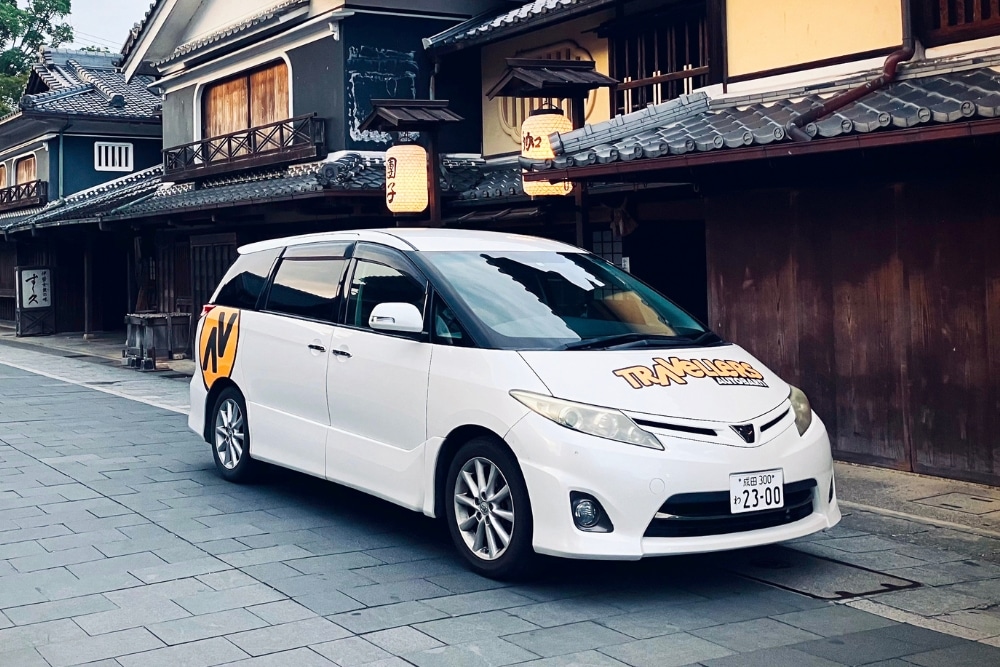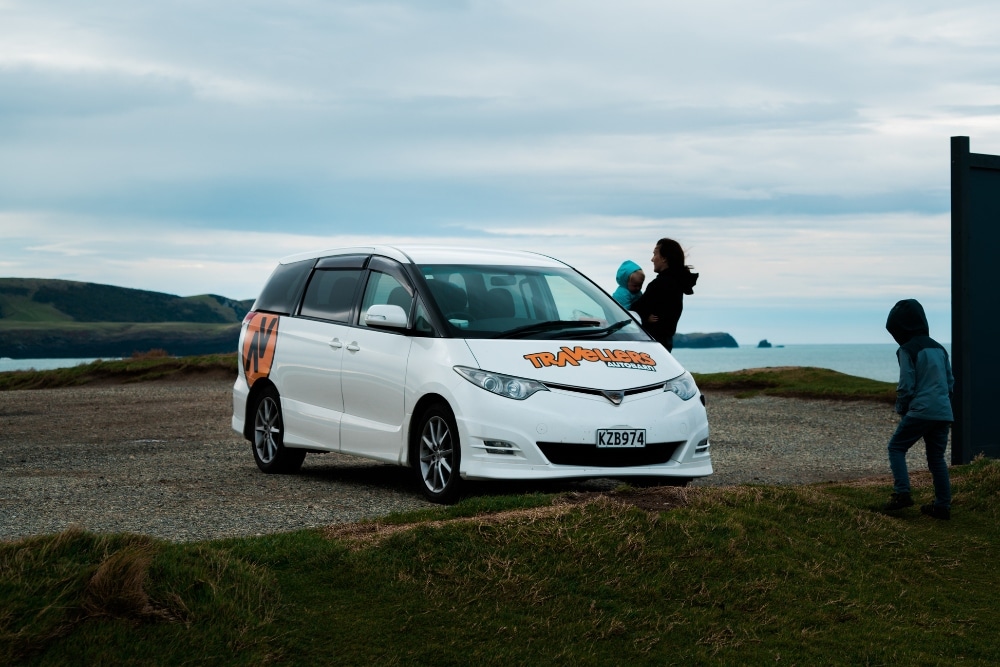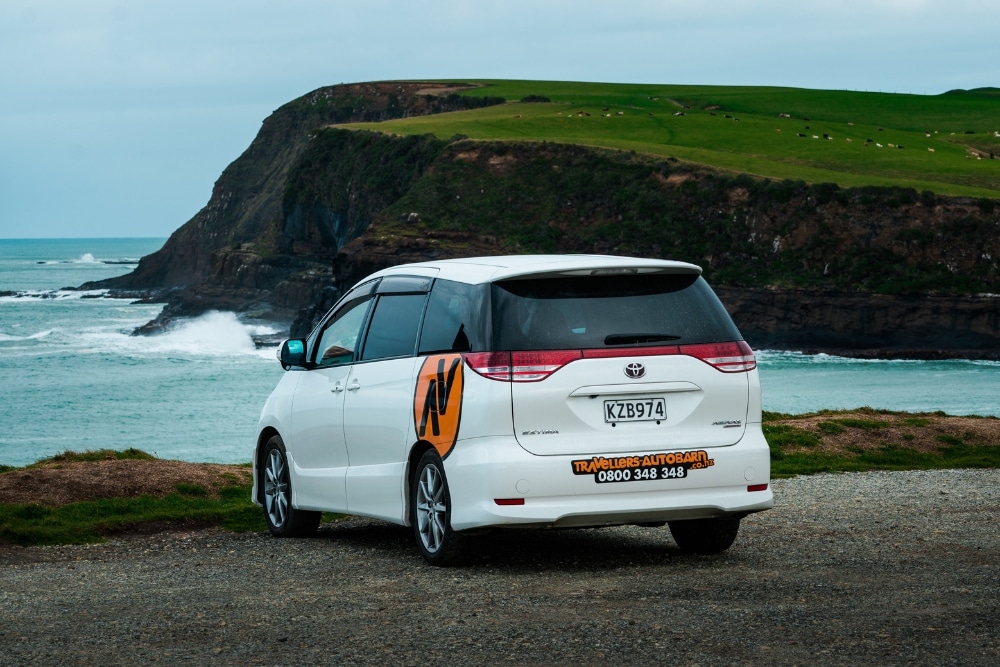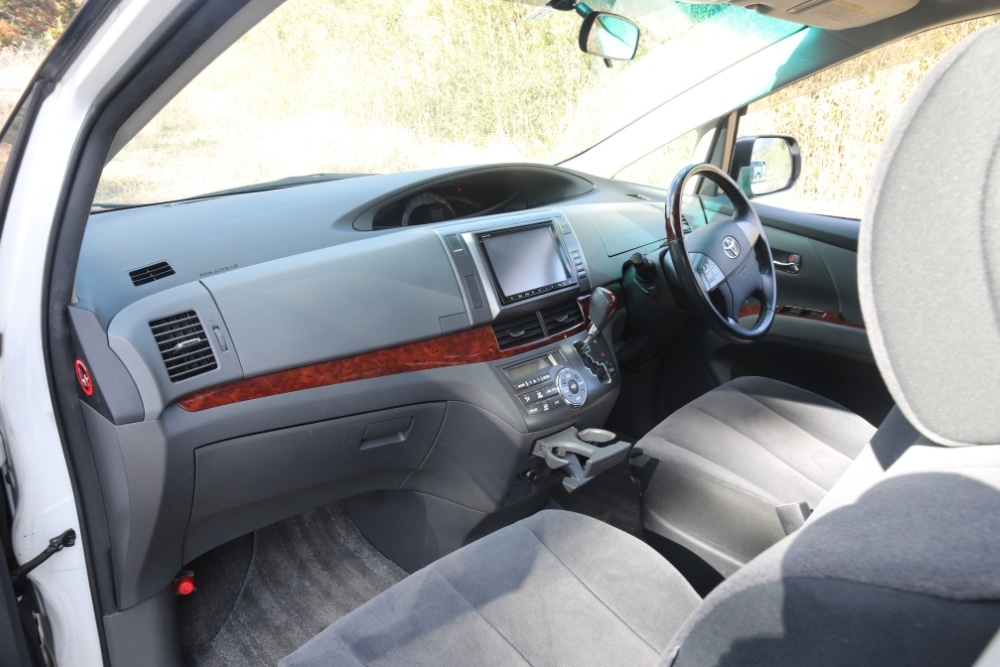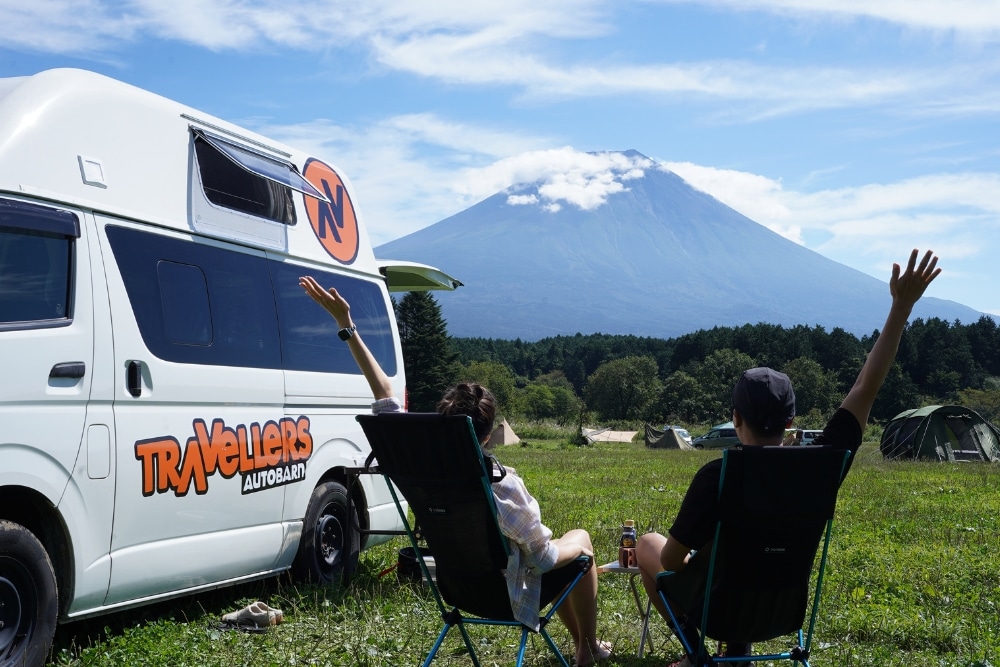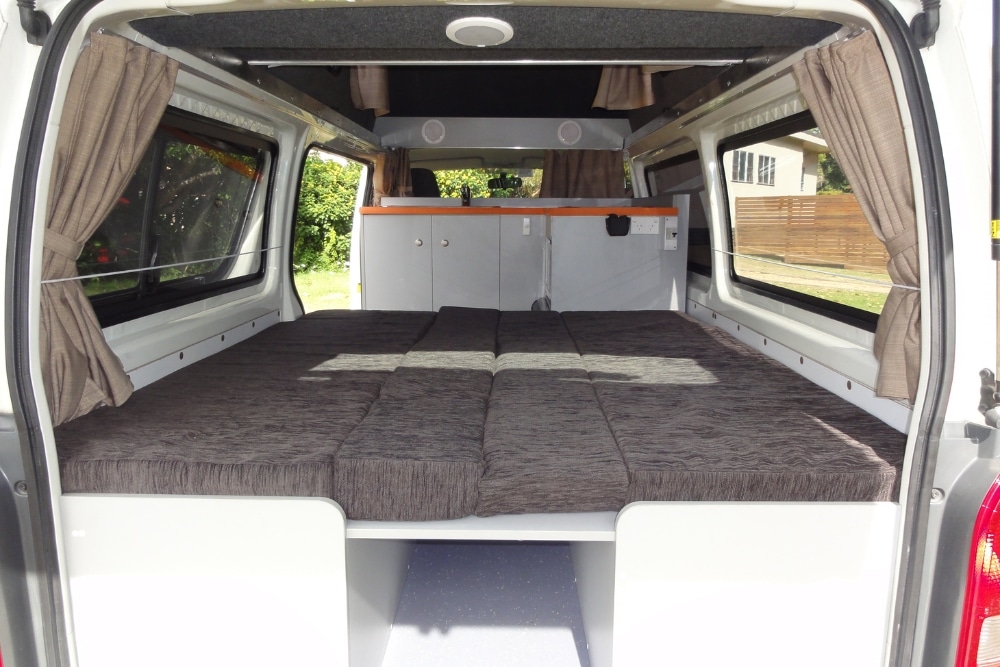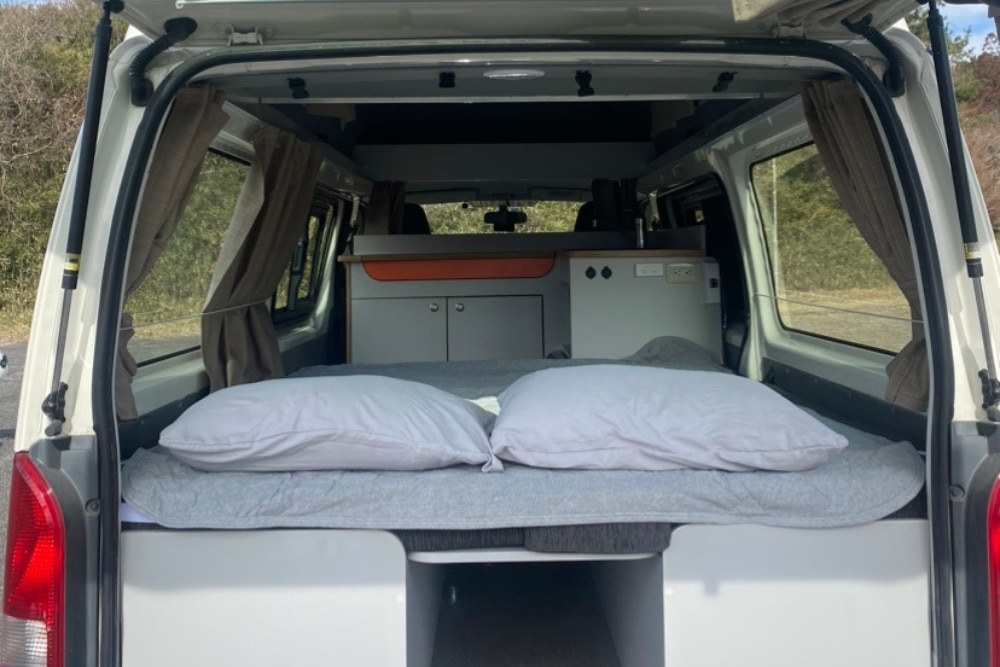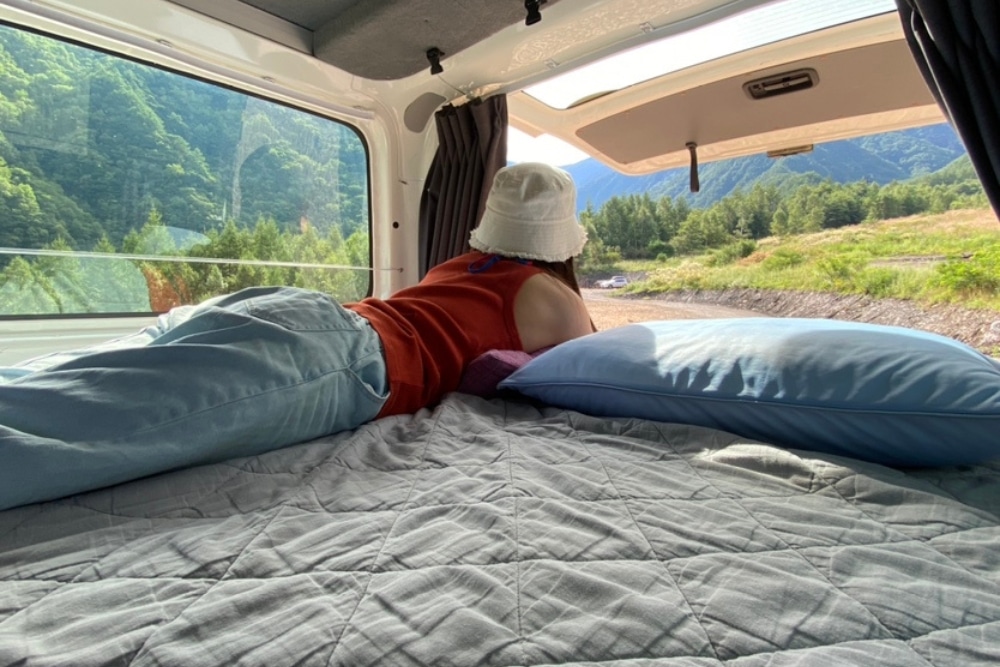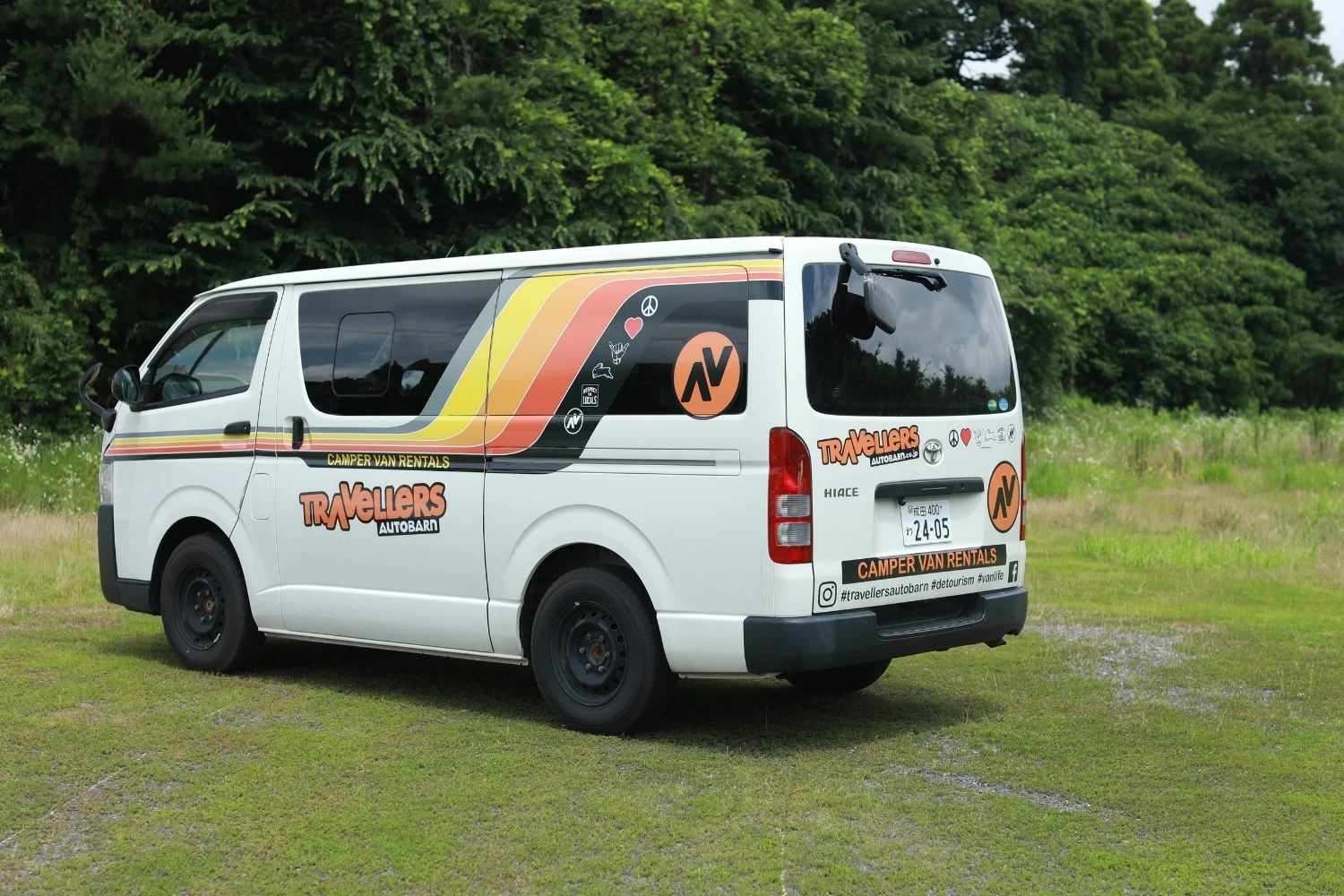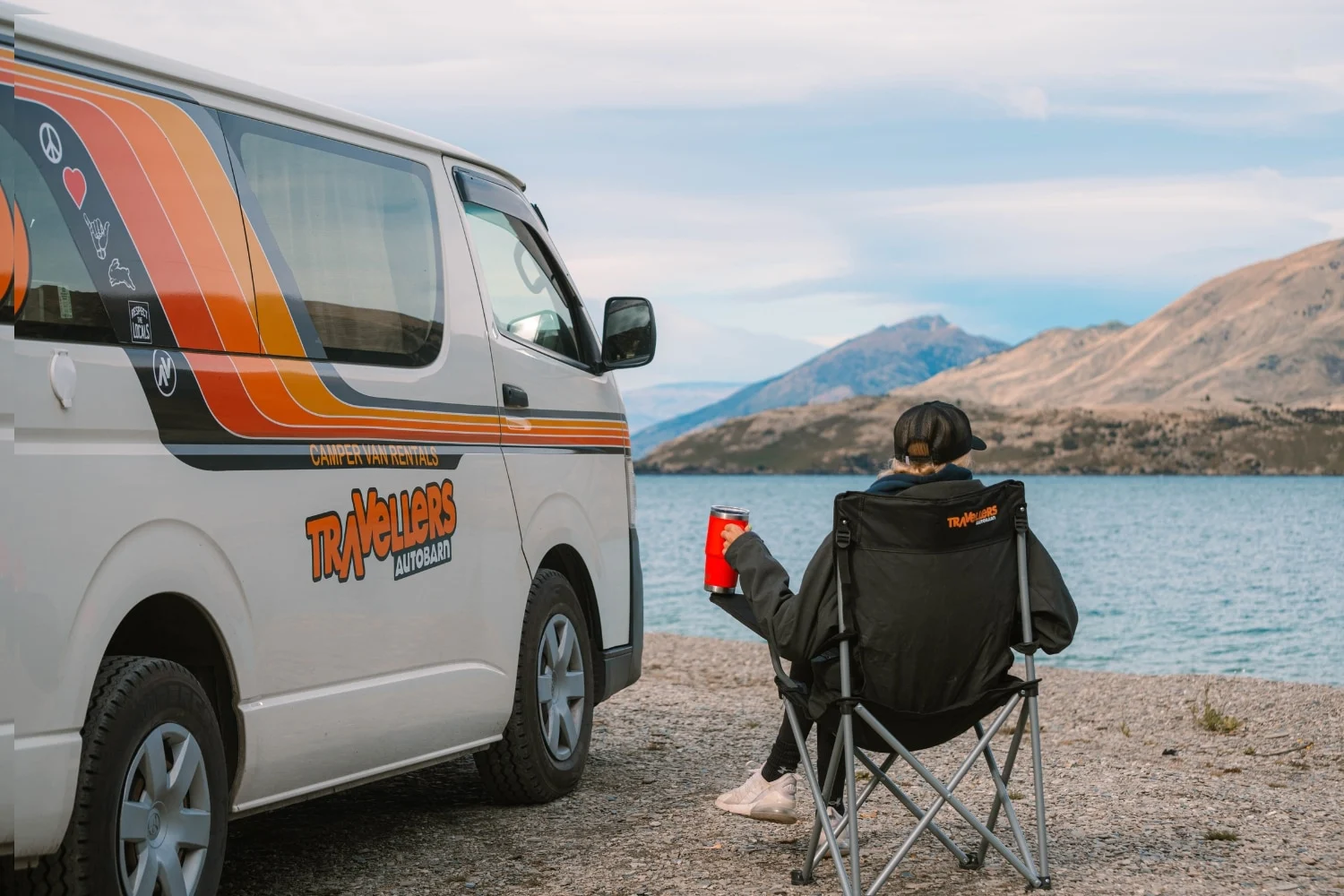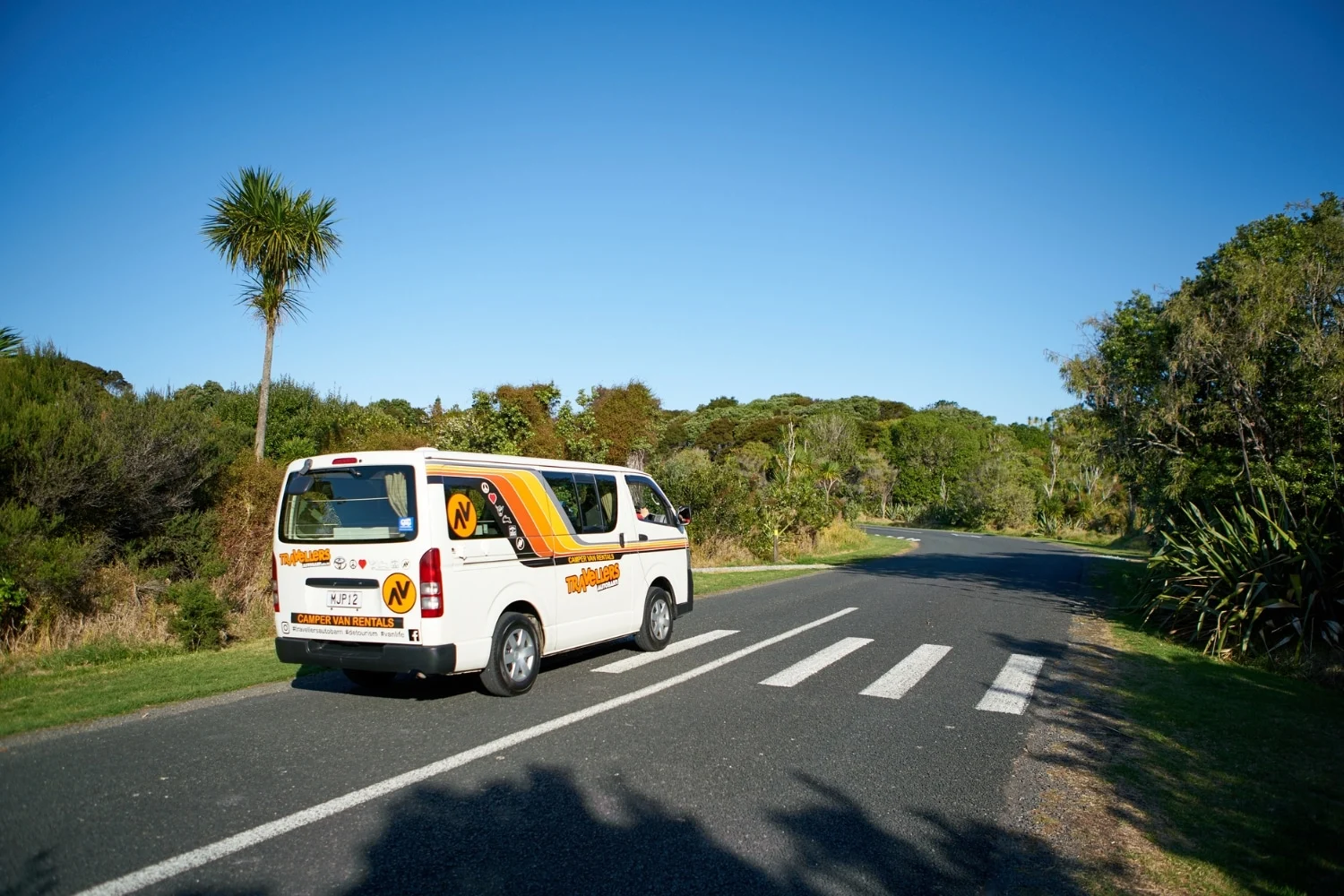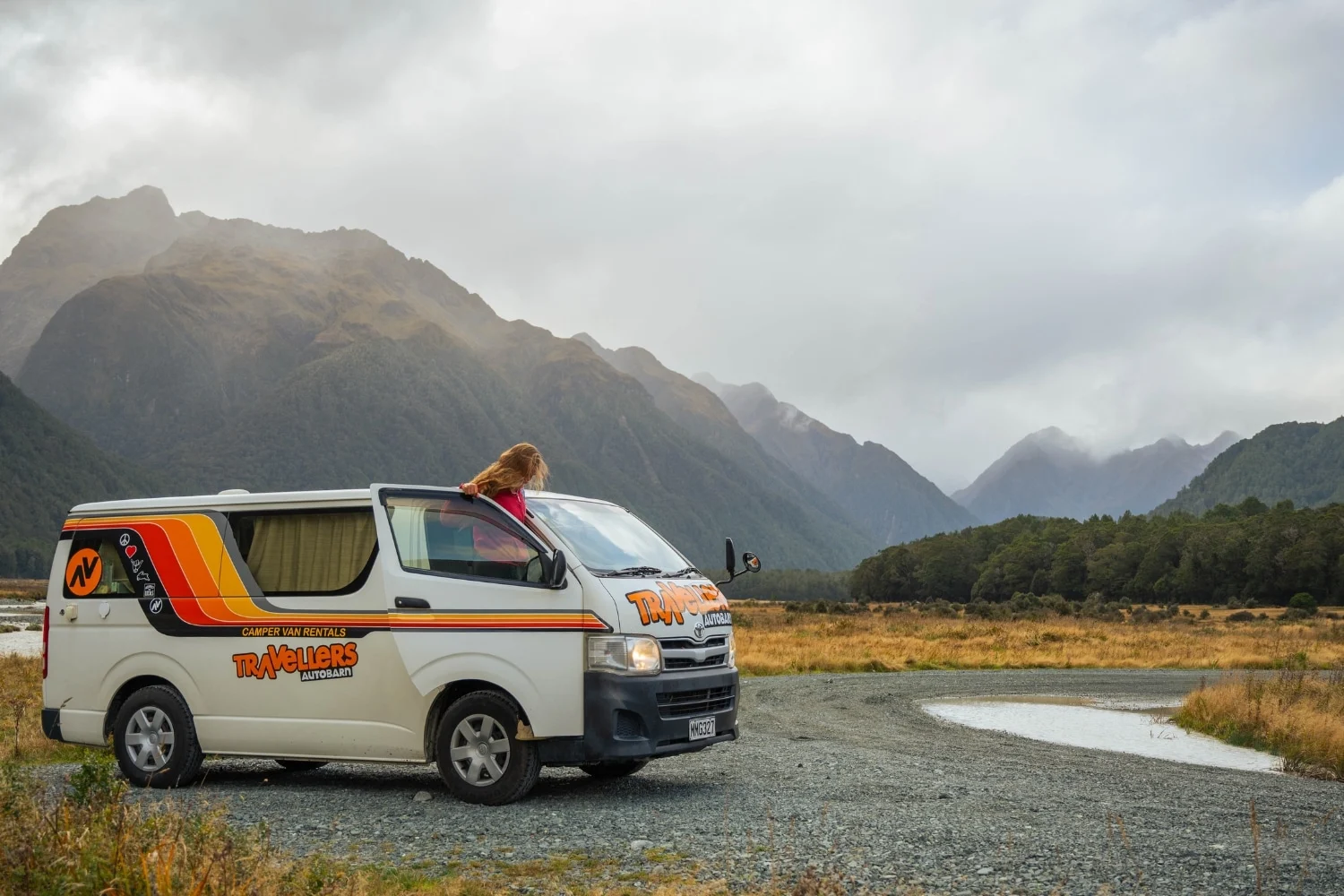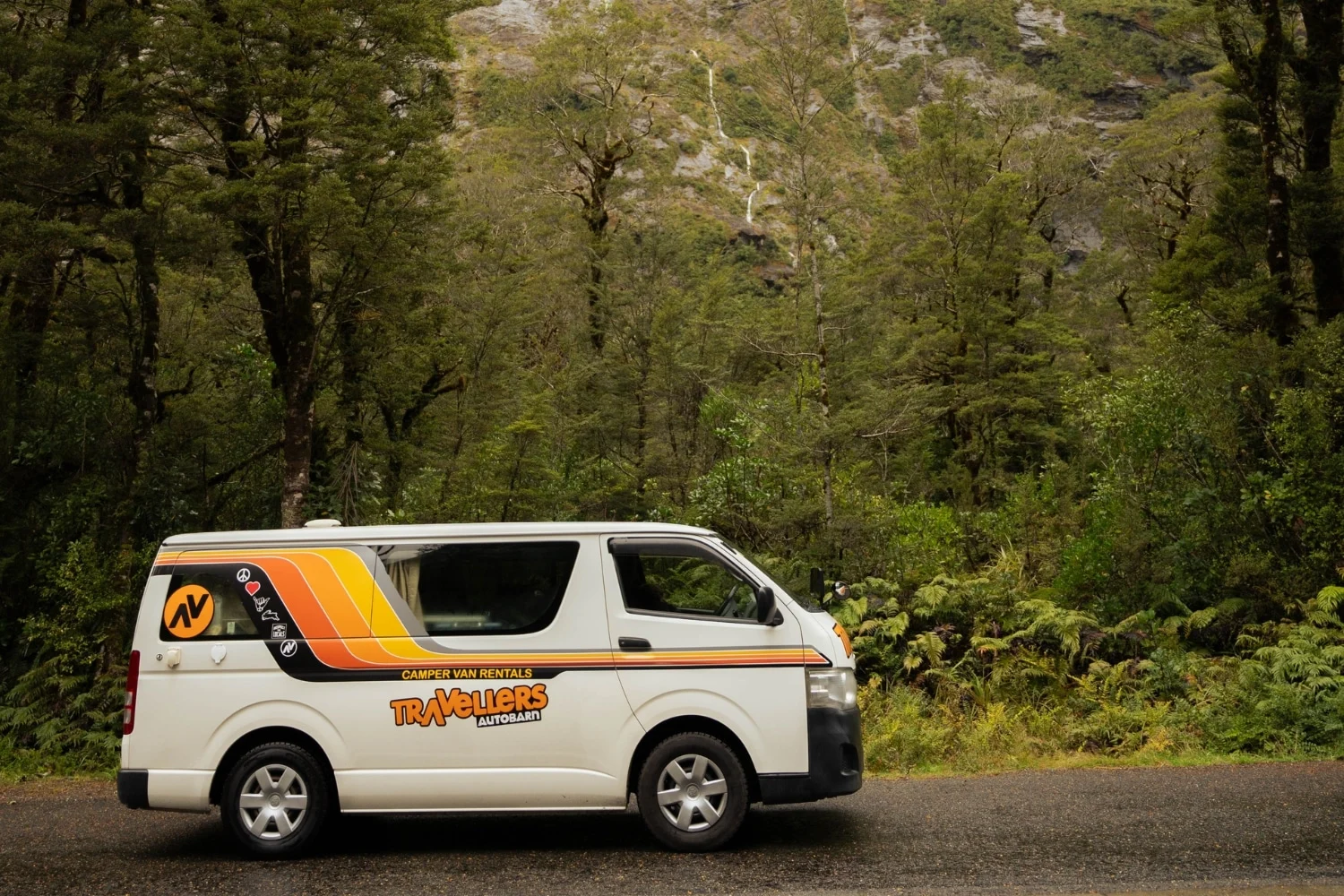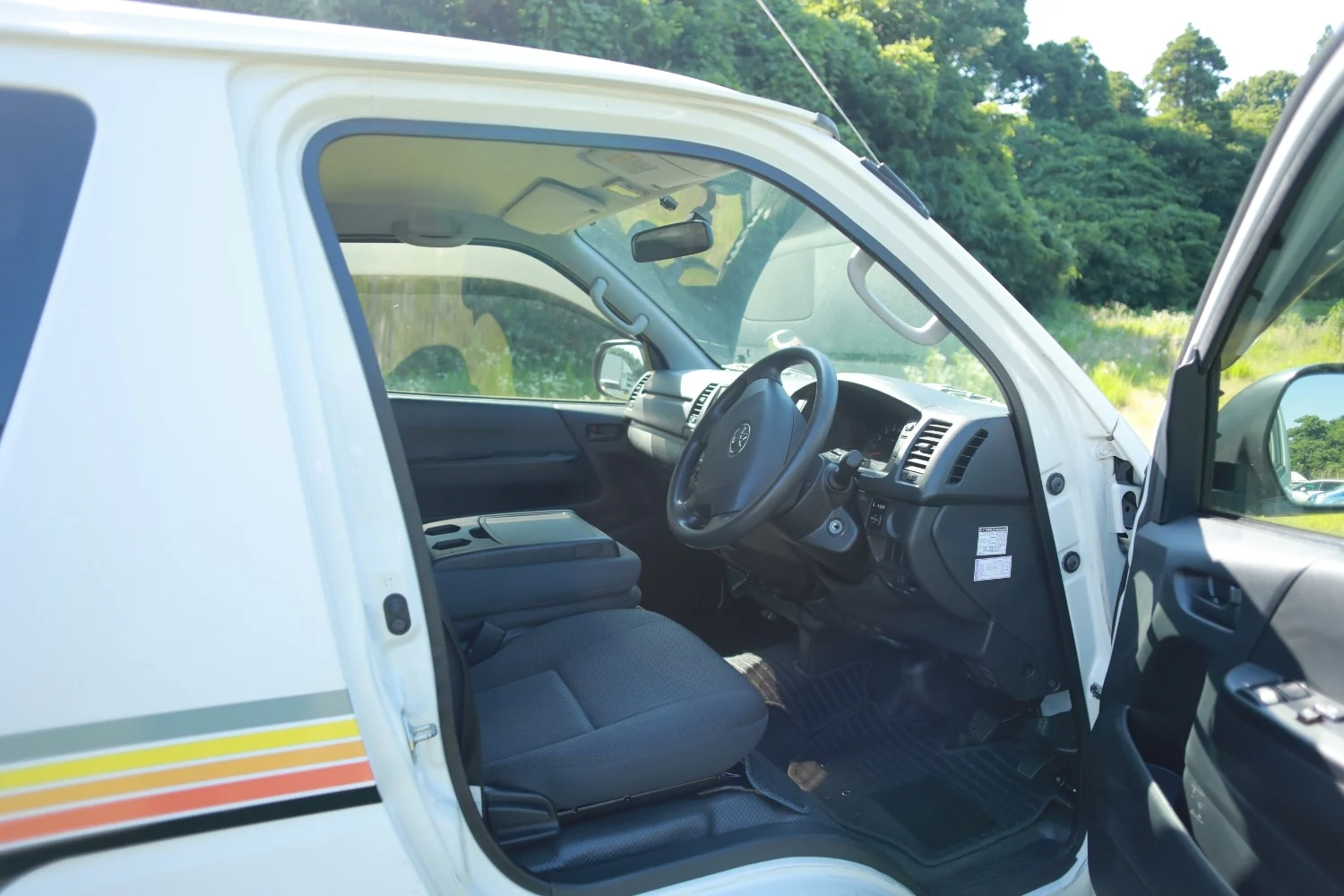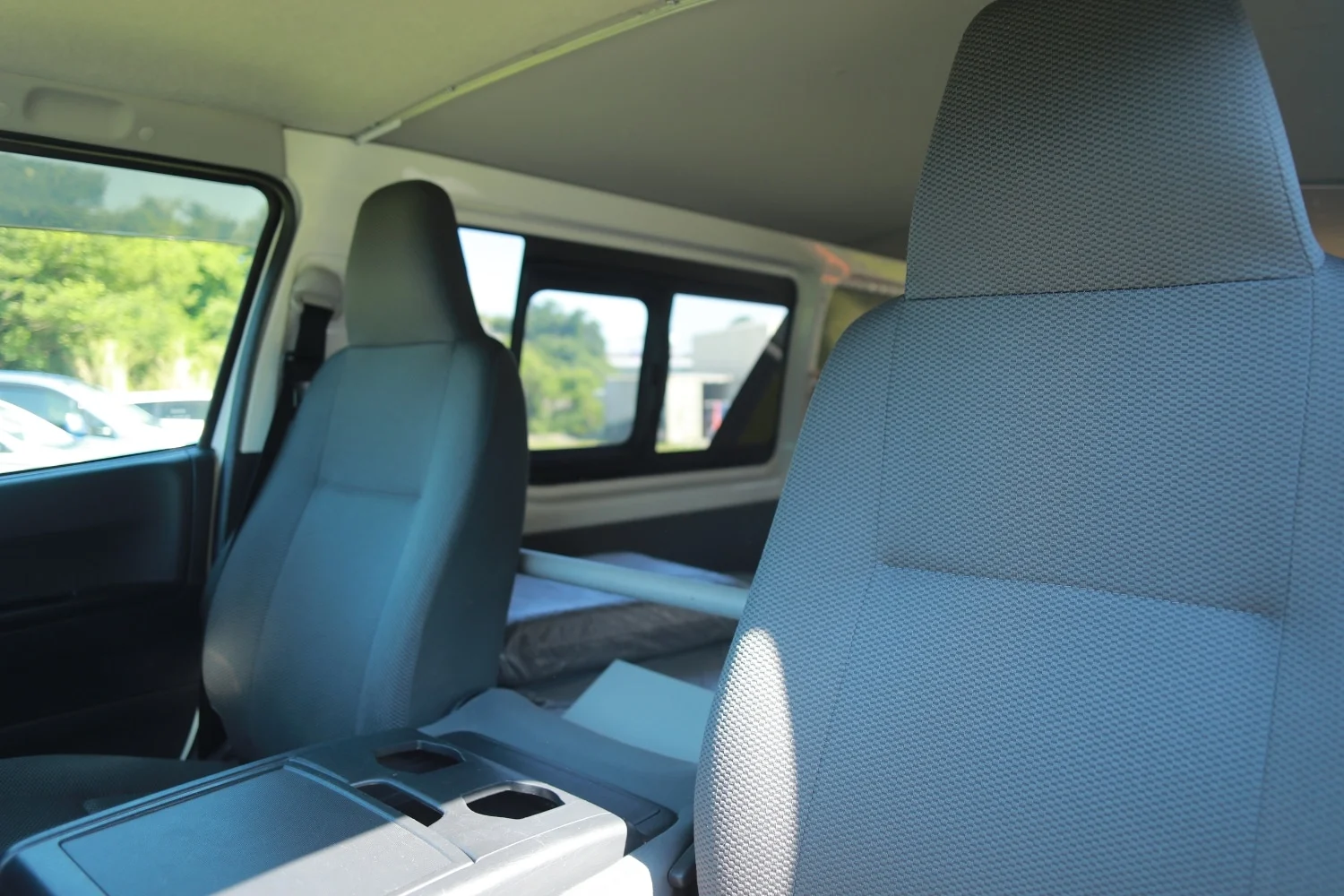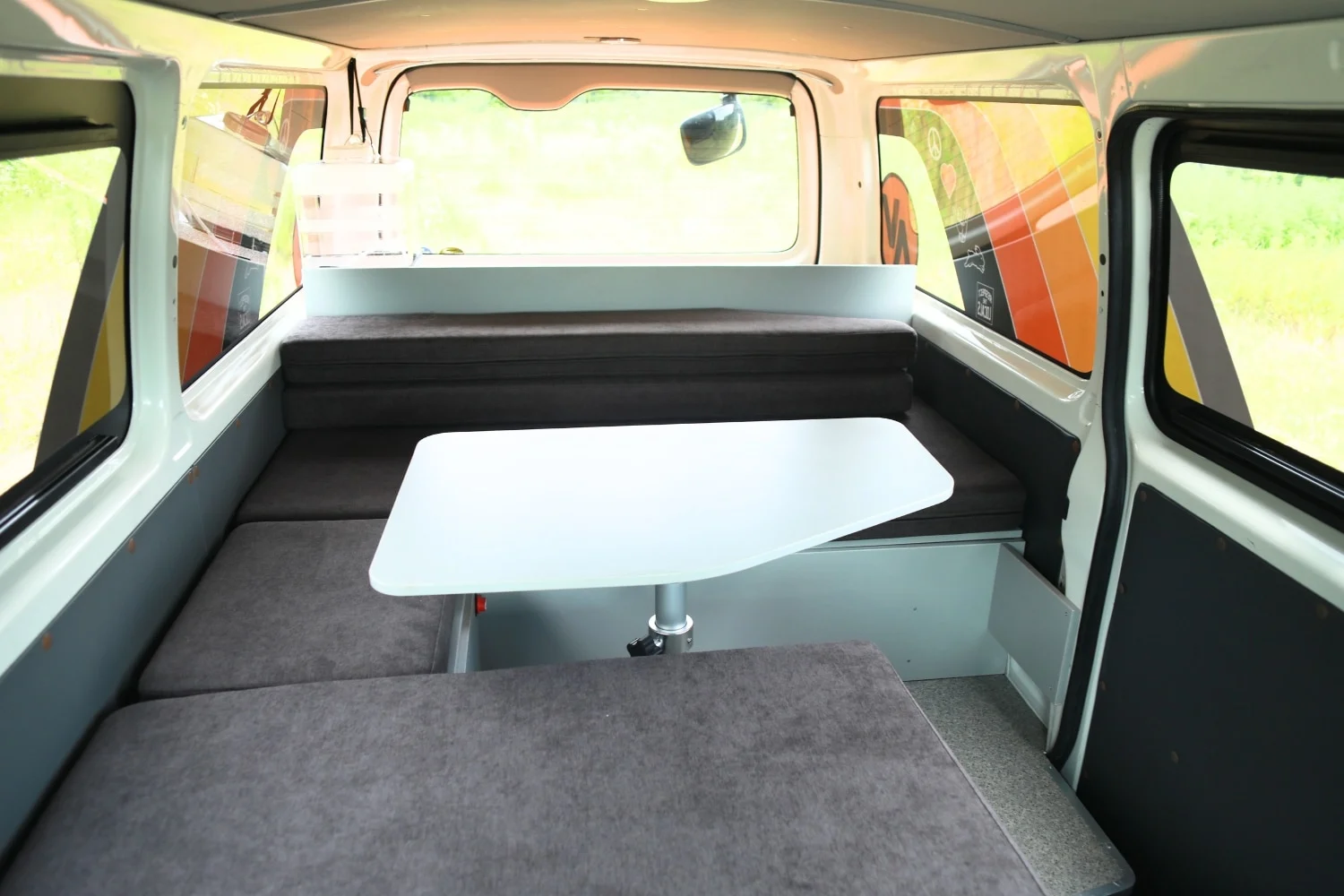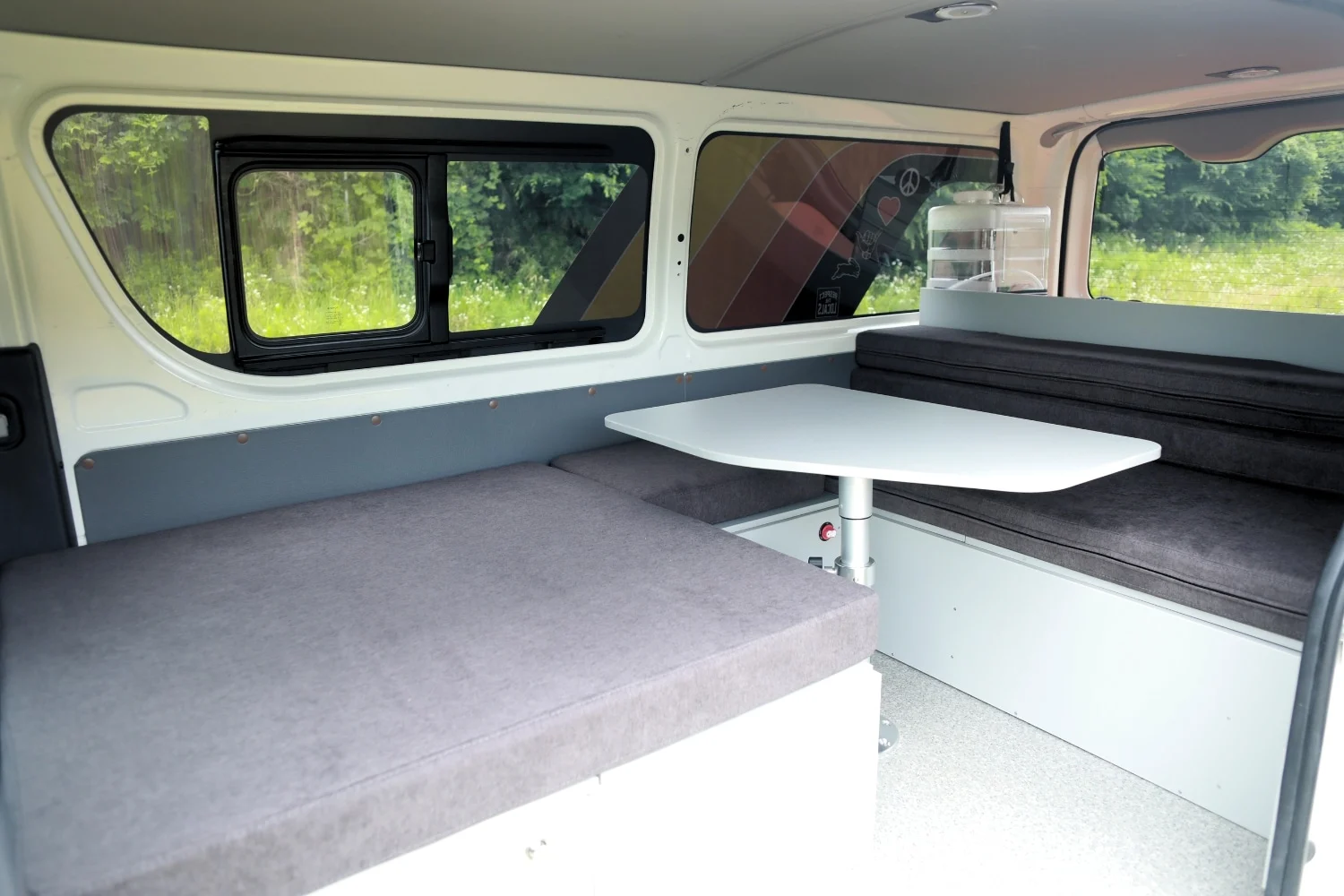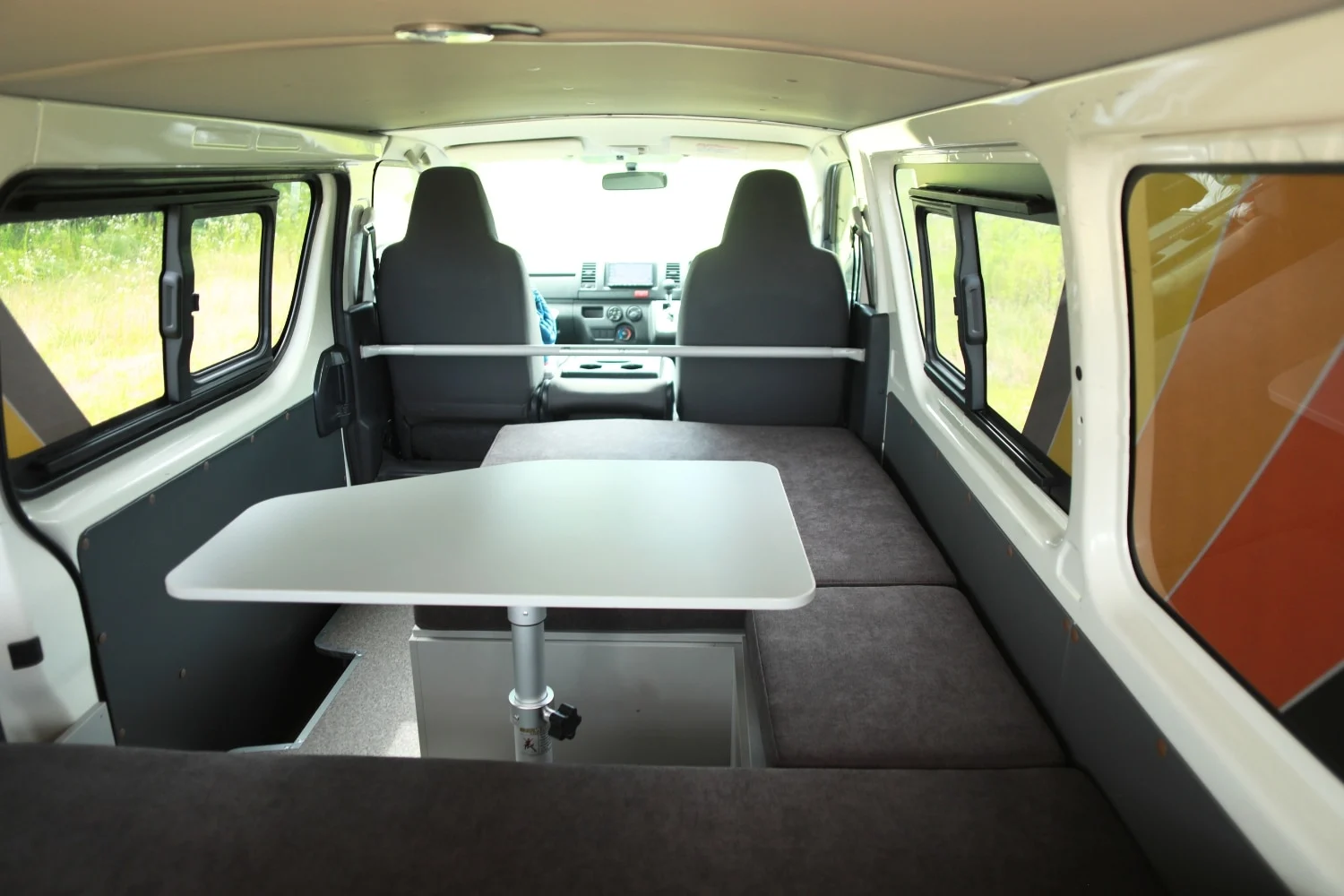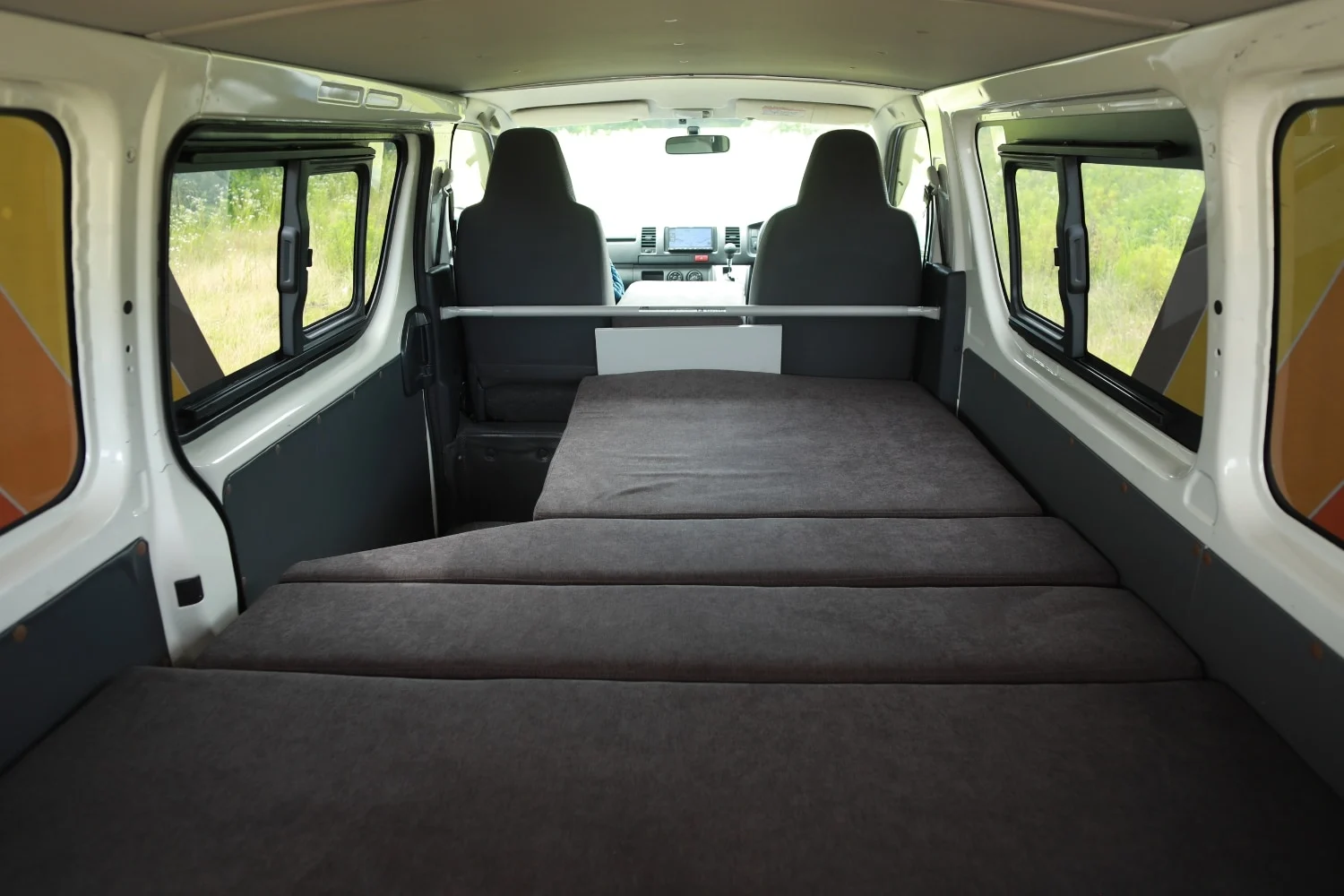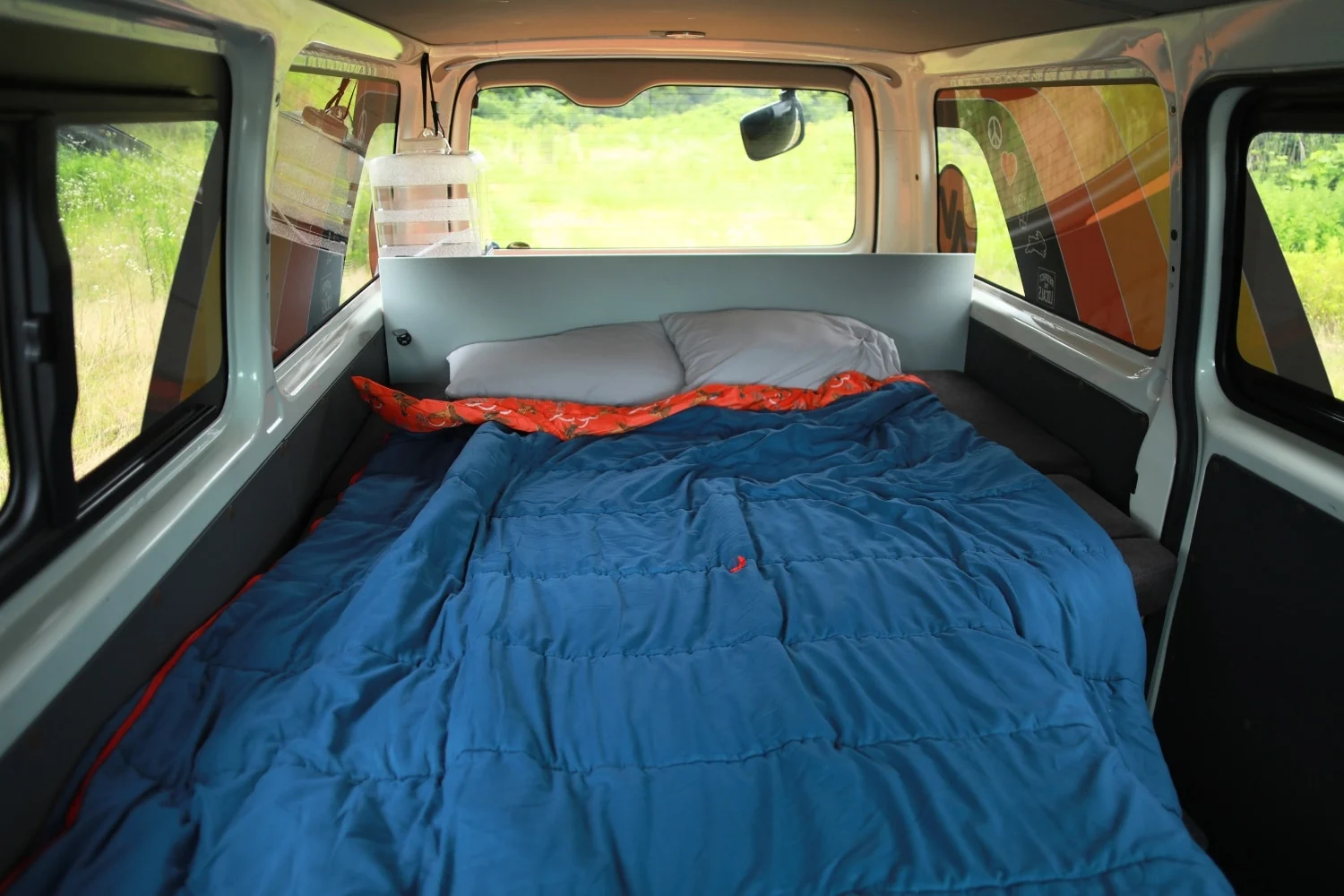

One of the best things about travelling through Japan by campervan is the freedom to go at your own pace. You can spend the morning cruising along the coast, stop for lunch in a small town and settle in near the countryside by evening.
To make that freedom work, though, you need to keep an eye on a few everyday essentials. Gas, water and power help you cook, clean, charge your devices and stay comfortable throughout the trip.
Fortunately, managing them is not complicated. Once you understand your campervan’s setup and get into a simple routine, it quickly becomes part of life on the road.
Get to Know Your Campervan Before You Leave
Before driving away from the rental depot, take a few minutes to learn how everything works.
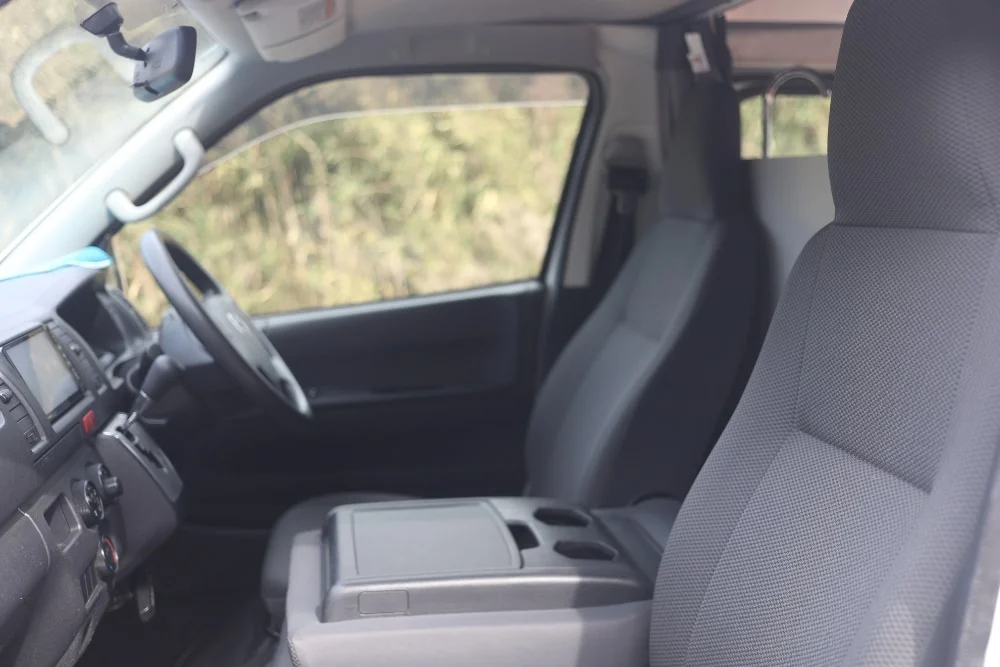
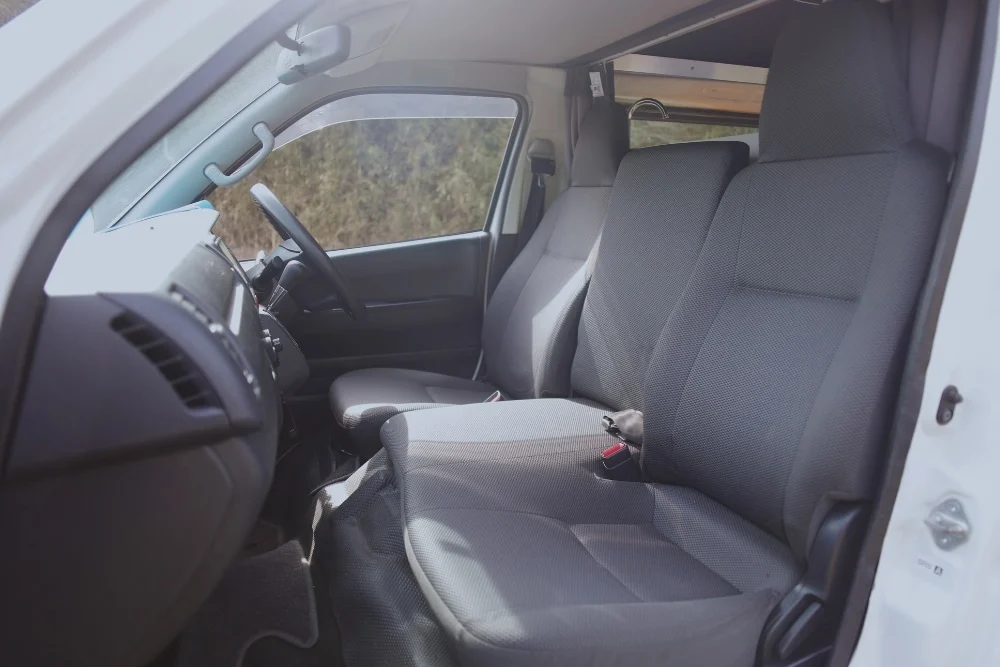
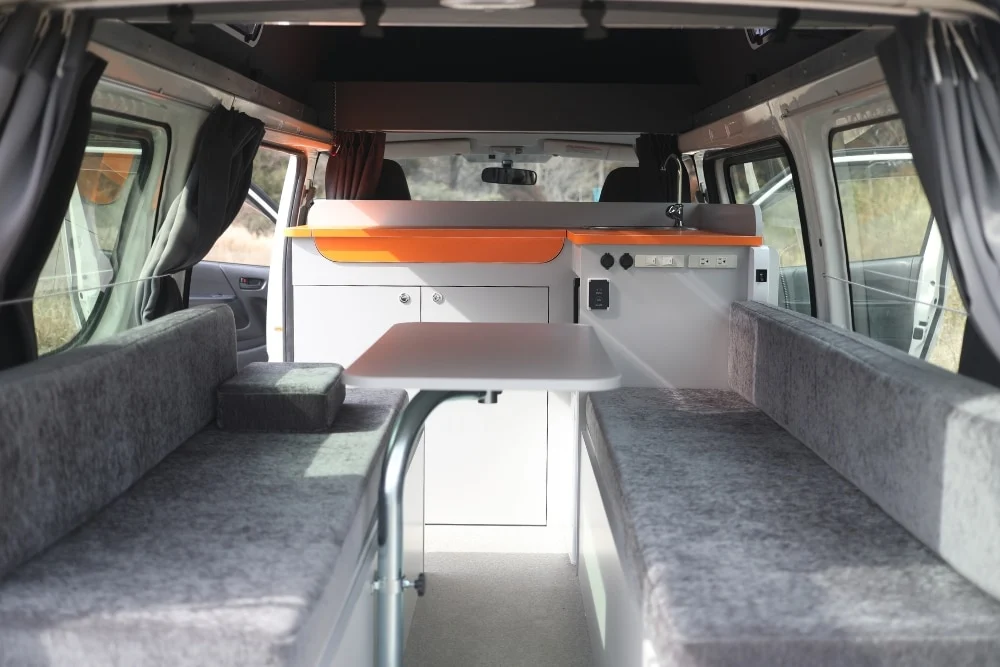
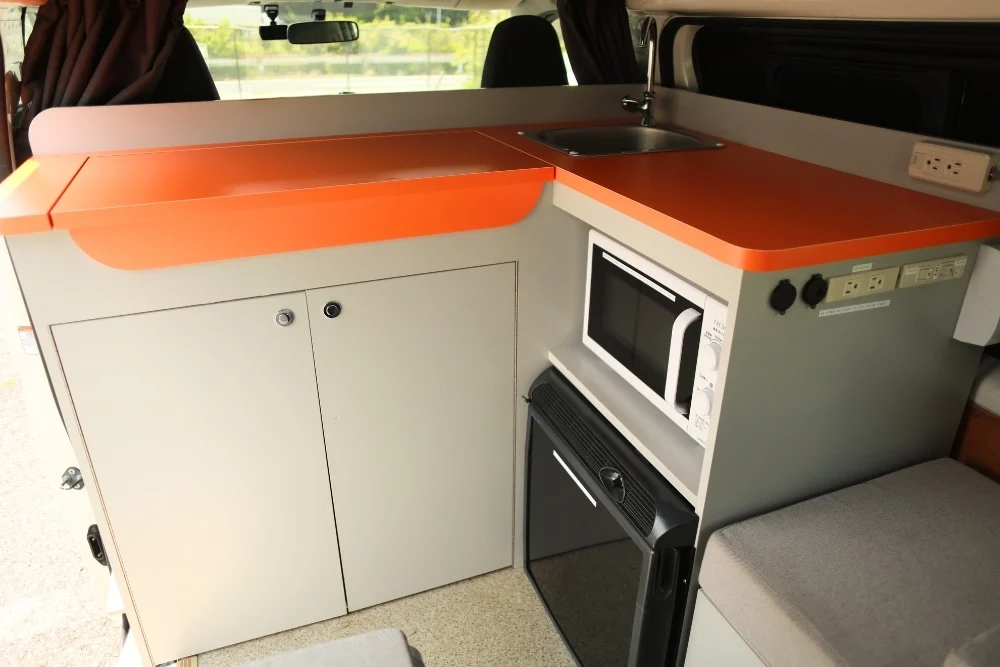
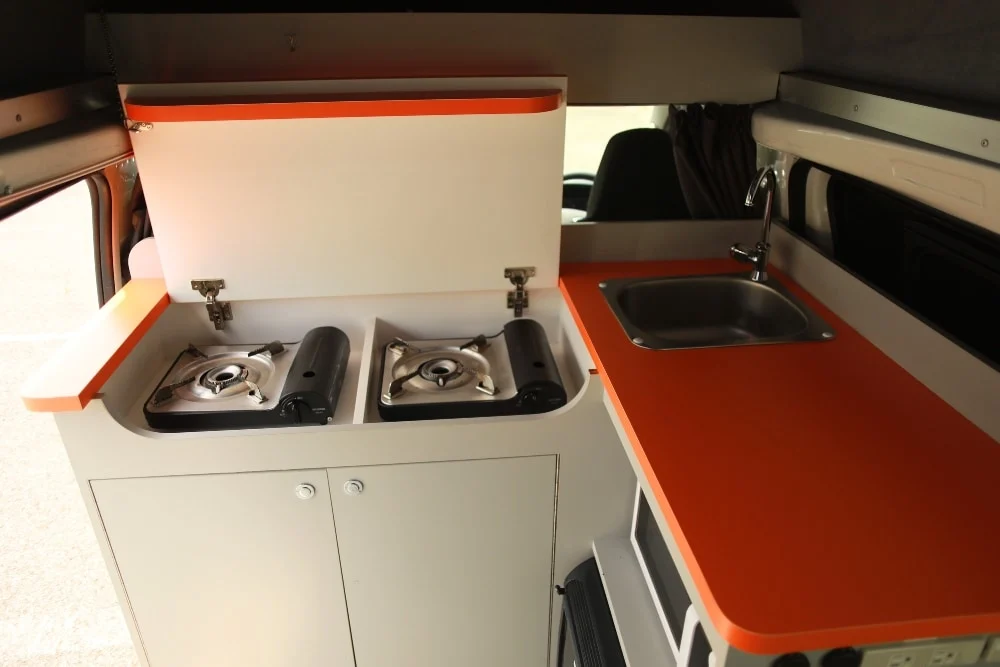
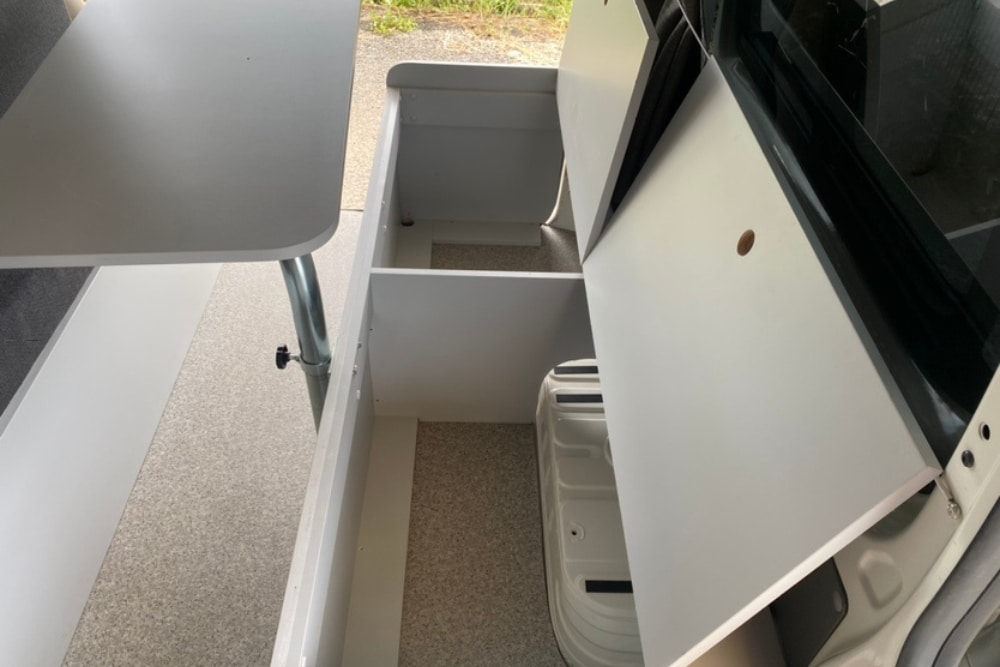
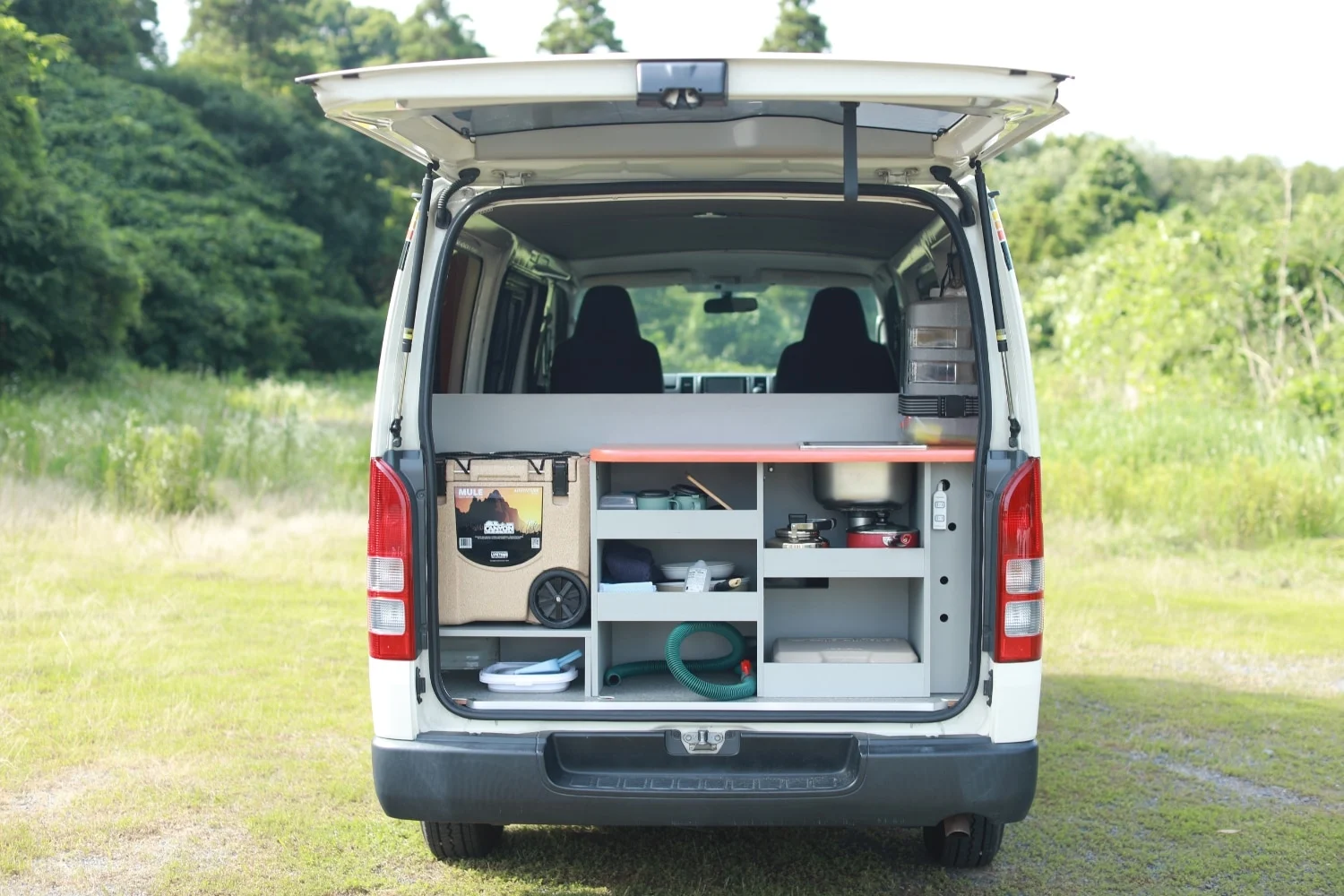
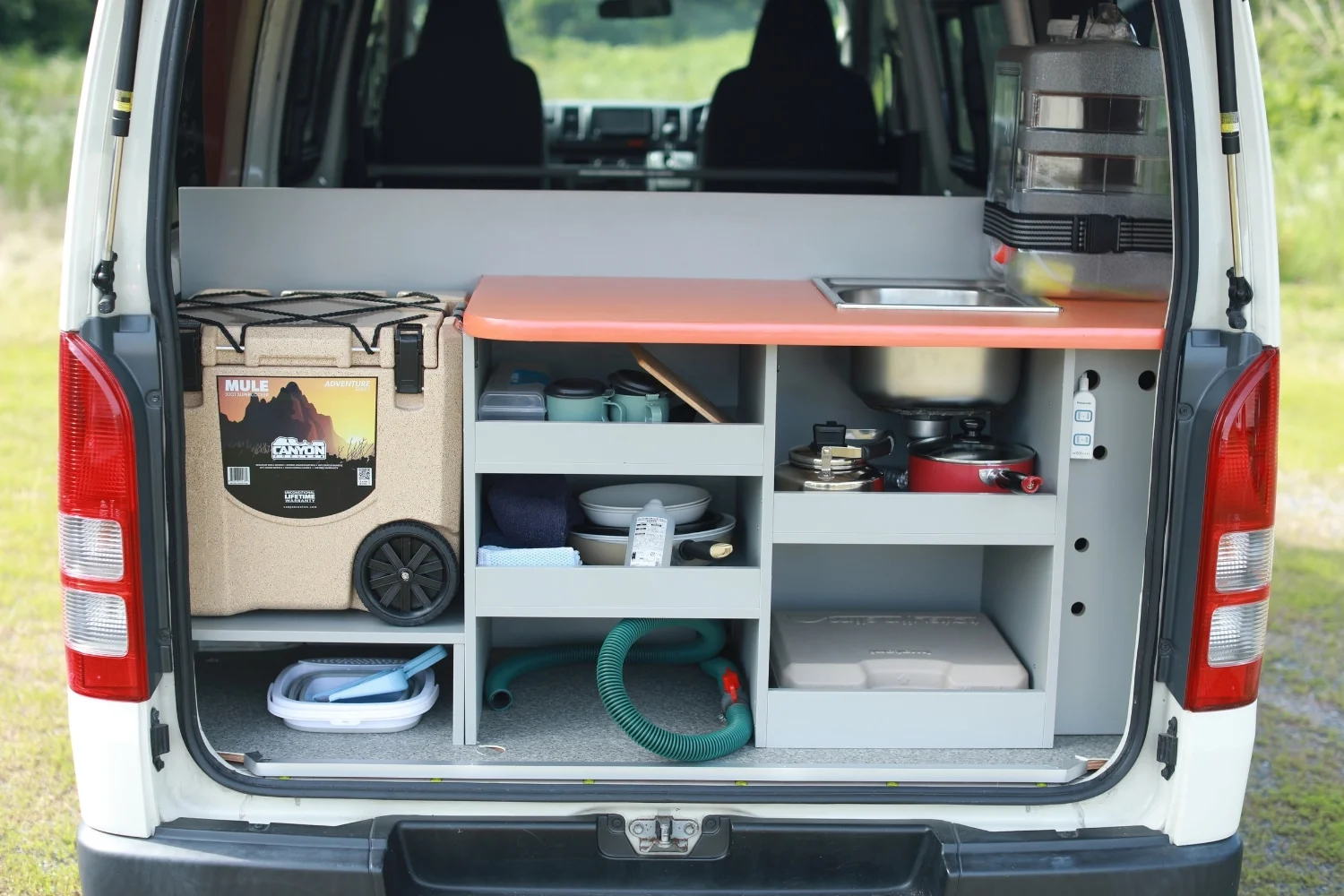
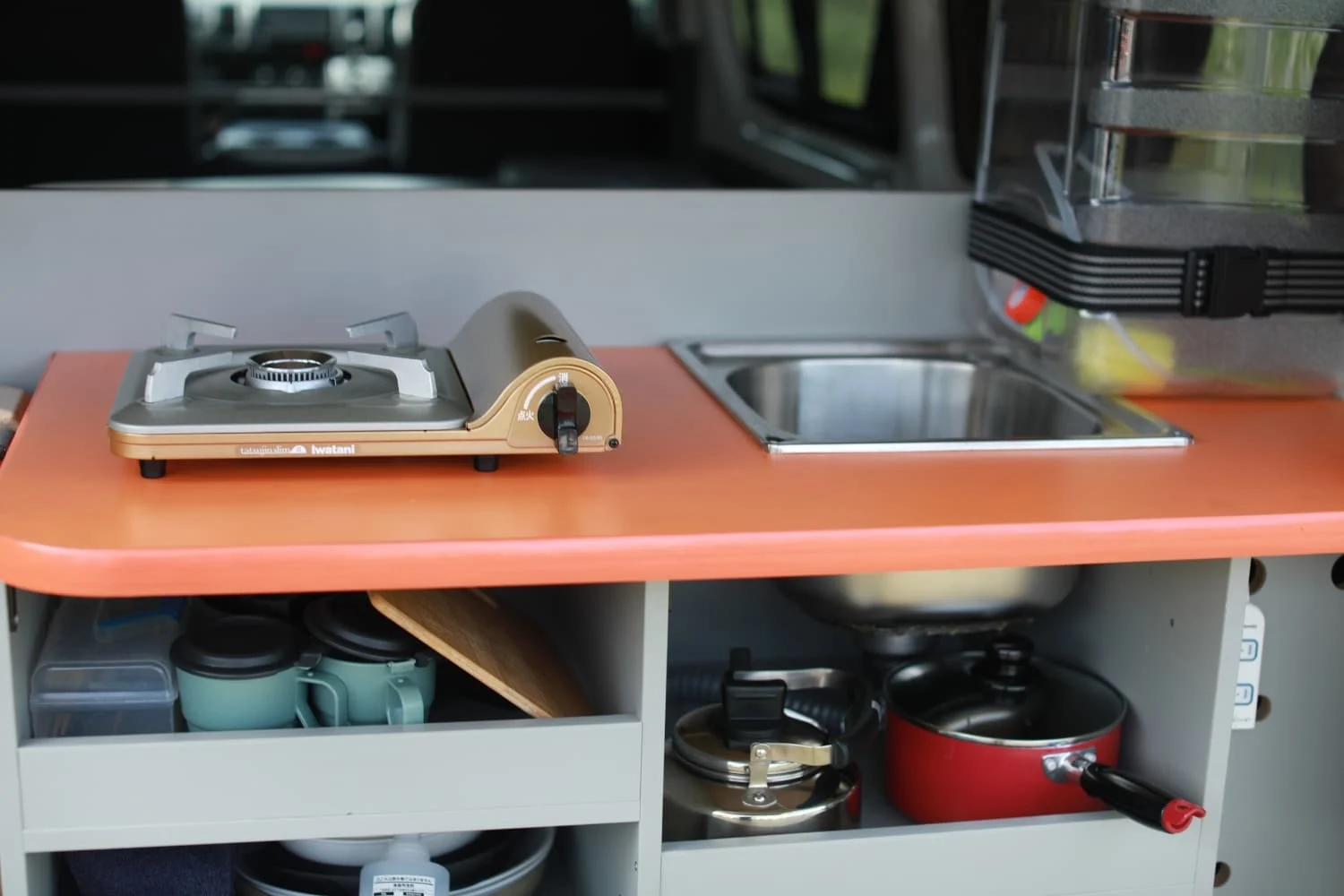
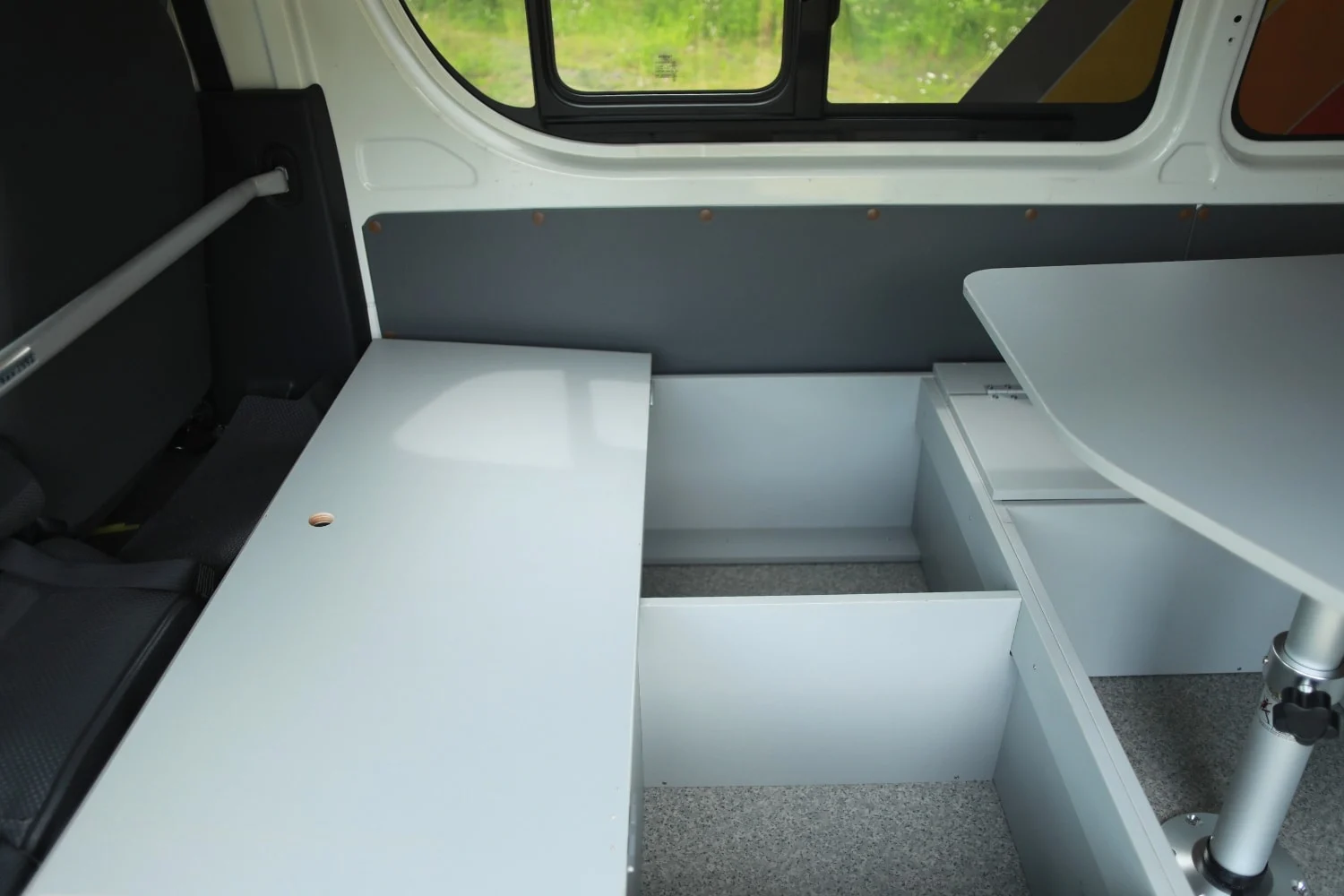
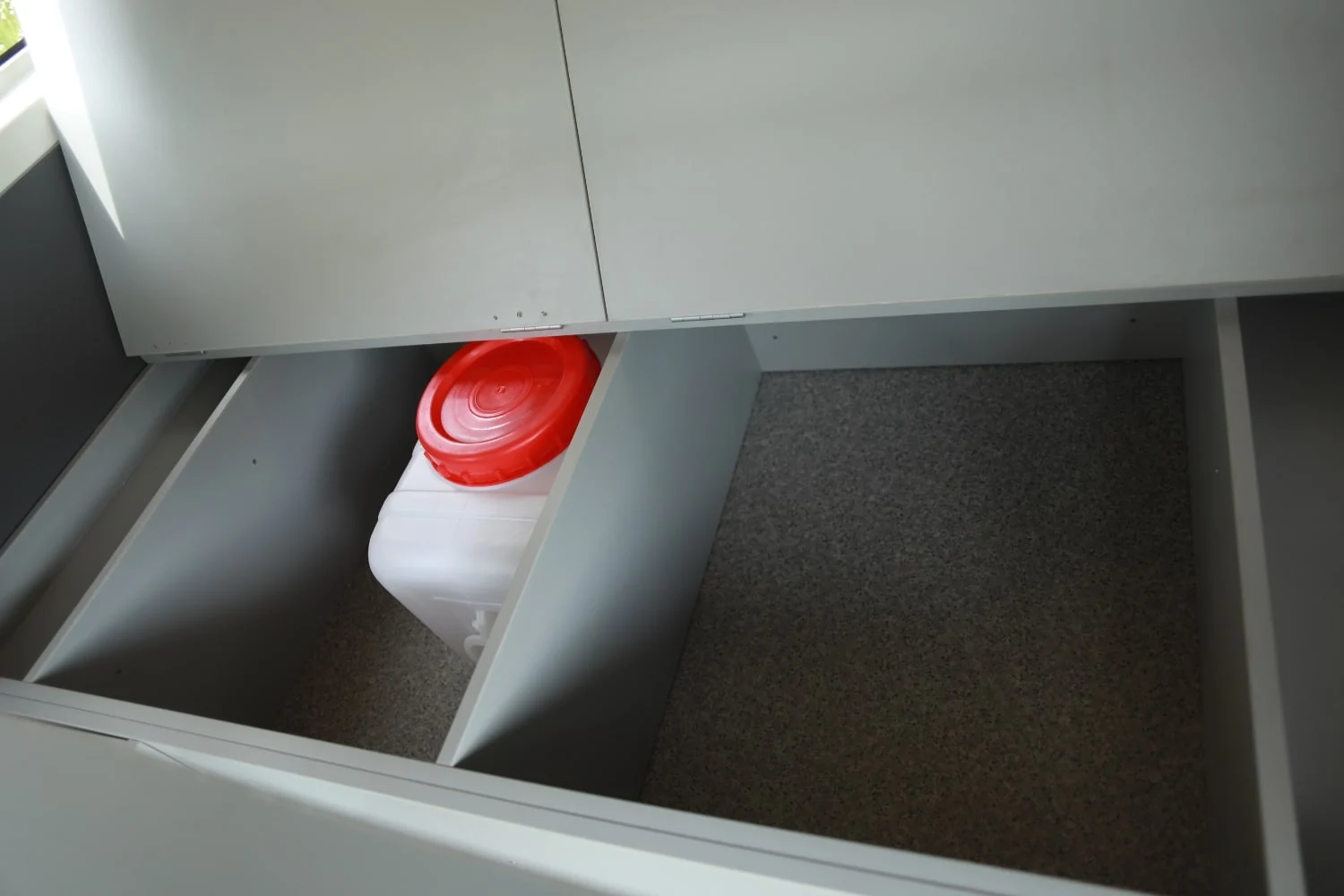
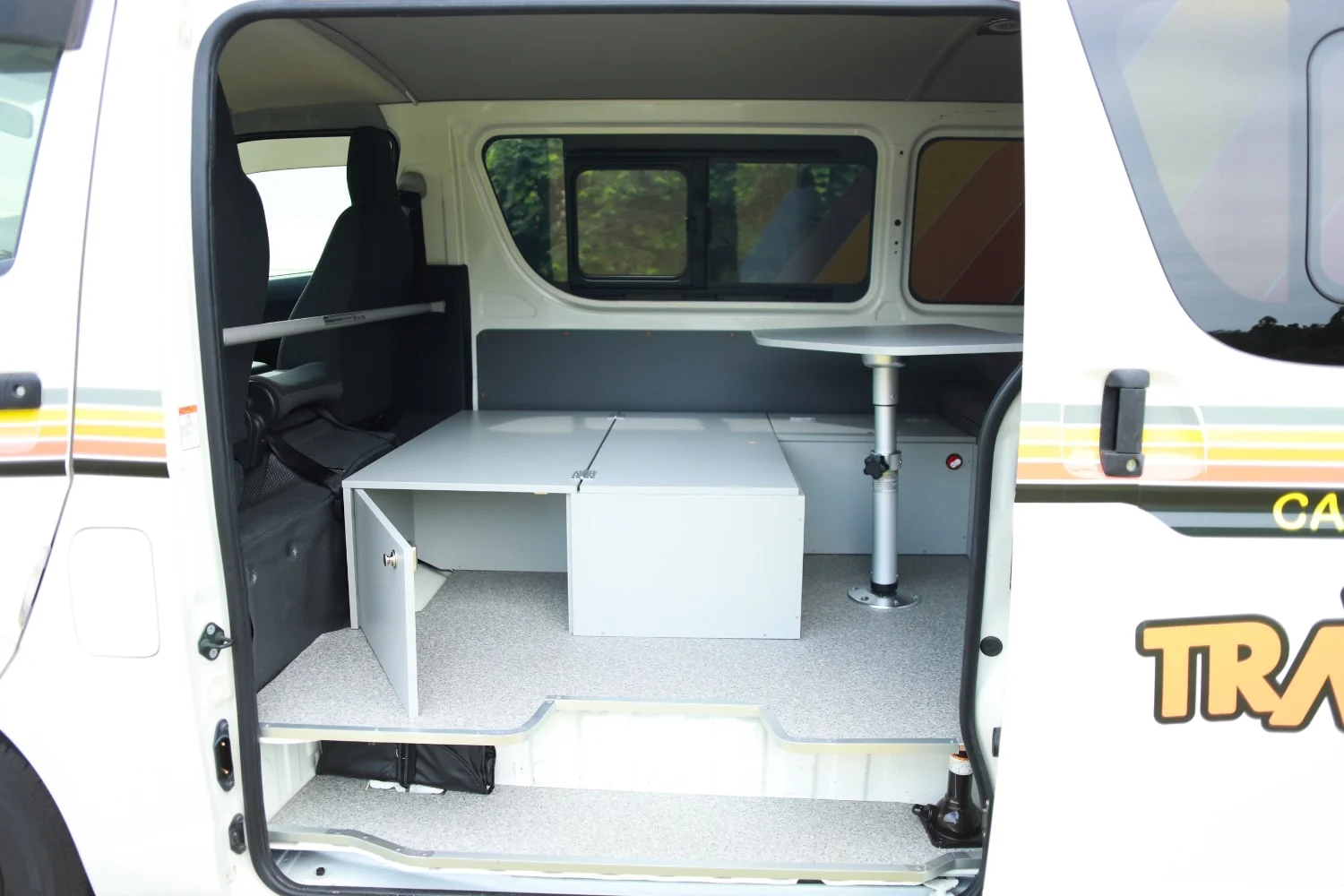
Ask the team to show you how to use the cassette stove, water supply, fridge, lights and charging points. You should also find out how the leisure battery recharges, which gas canisters are suitable and how much water the vehicle can carry.
This is especially important because setups can vary between providers. Your campervan rental Tokyo provider will be able to walk you through exactly how your vehicle’s water tank, cassette stove and gas canisters work, so always confirm the details for your specific vehicle before you set off.
Taking a few photographs or short videos during the handover can be helpful if you forget something later.
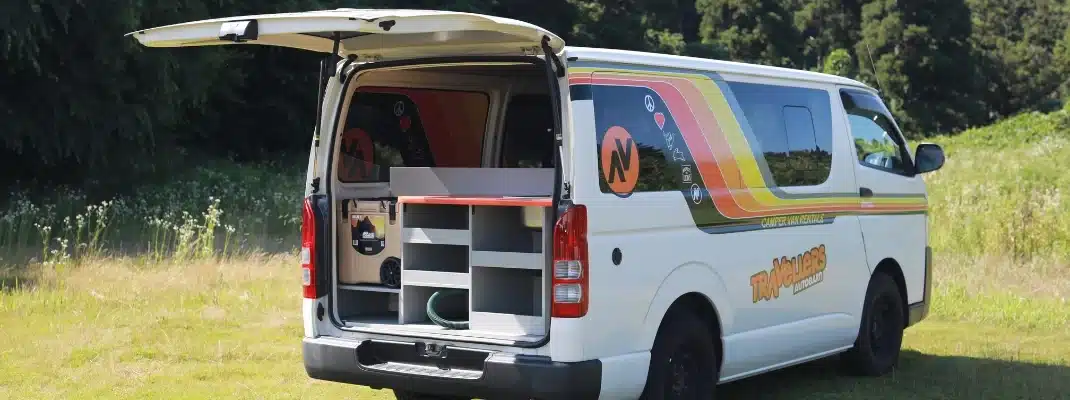
Managing Gas for Cooking
Gas is usually used for cooking simple meals in or beside the campervan, typically using a portable cassette stove and gas canisters supplied by the rental company.
Use the Right Gas Canisters
Make sure you know exactly which type of gas canister your stove requires. Similar-looking canisters are not always suitable, so avoid using anything that has not been approved for your equipment.
Replacement canisters may be available from supermarkets, convenience stores and outdoor shops. It is still worth carrying a spare when travelling through quieter areas, where shops may be smaller or close earlier.
Never force a connection or attempt to modify the gas setup. Contact the rental company if you are unsure.
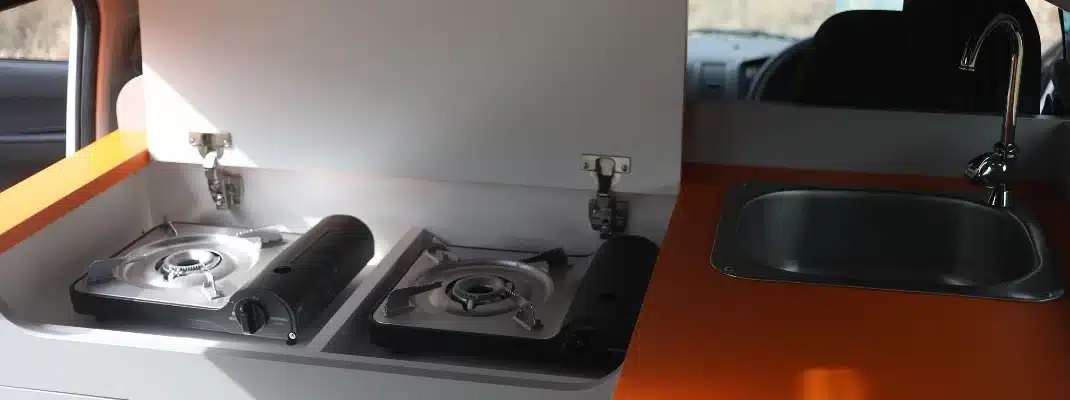
Keep Cooking Simple
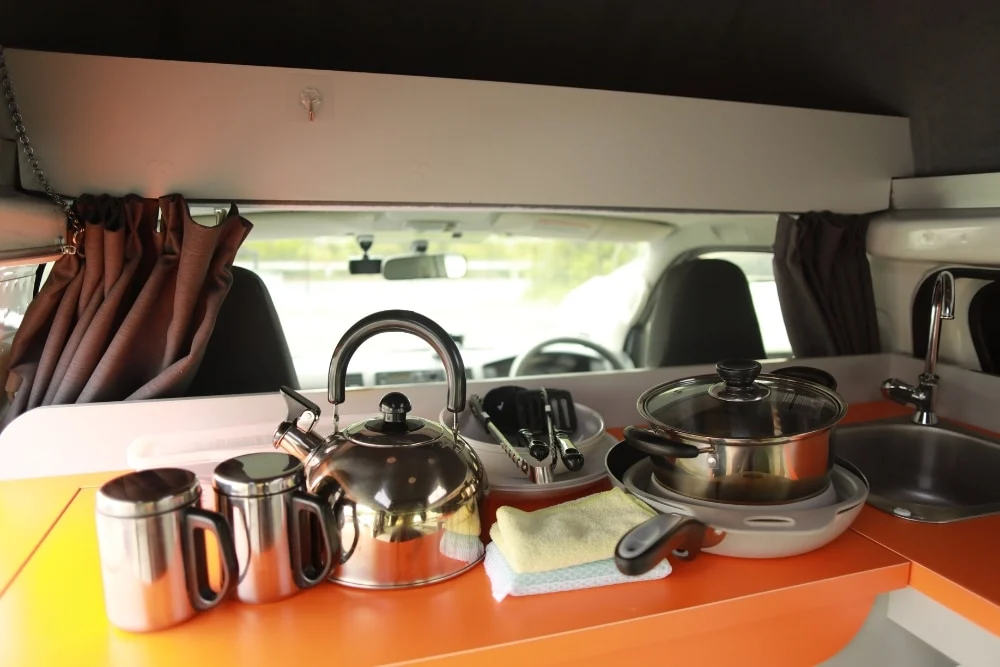
Campervan meals do not need to be complicated. One-pot dishes, noodles, rice and simple breakfasts are easy to prepare and do not use much gas. A few simple habits can also help you cook safely and conserve fuel, including:
- Use lids on pans to reduce cooking time
- Keep the area ventilated
- Move bedding or other flammable items away from the stove
- Always turn the gas off fully before driving or going to sleep
Eating out occasionally is also part of the fun. Japan has plenty of local restaurants, roadside stops and casual places to eat, so you will not need to cook every meal inside the campervan.

Keeping Your Water Supply Topped Up
Fresh water is an essential resource while on the road. You’ll need it for cooking, cleaning and washing dishes, but campervan tanks and containers are usually limited. Note that the water in your campervan’s tank comes from a well and is not recommended for drinking, so always carry separate water for that purpose.
Campsites are often the easiest places to refill your tank for cooking and washing. Many provide taps, washing areas and shared facilities, although the exact amenities can vary. Since your campervan’s tank water is not intended for drinking, always keep separate bottled water on hand for that purpose rather than relying on the tank, and ask staff if you are unsure.
Japan’s roadside stations, known as Michi-no-Eki, usually provide toilets, parking and local information. However, they are not generally full campervan service points, so water refills and waste disposal may not be available unless clearly advertised.
Make Your Water Last Longer
A few simple habits can make your water supply last much longer:
- Turn the tap off while washing dishes.
- Wipe food from pans before cleaning them.
- Avoid using fresh water unnecessarily.
- Keep separate bottled water for drinking, especially before driving into rural areas.
Managing Power While You Travel
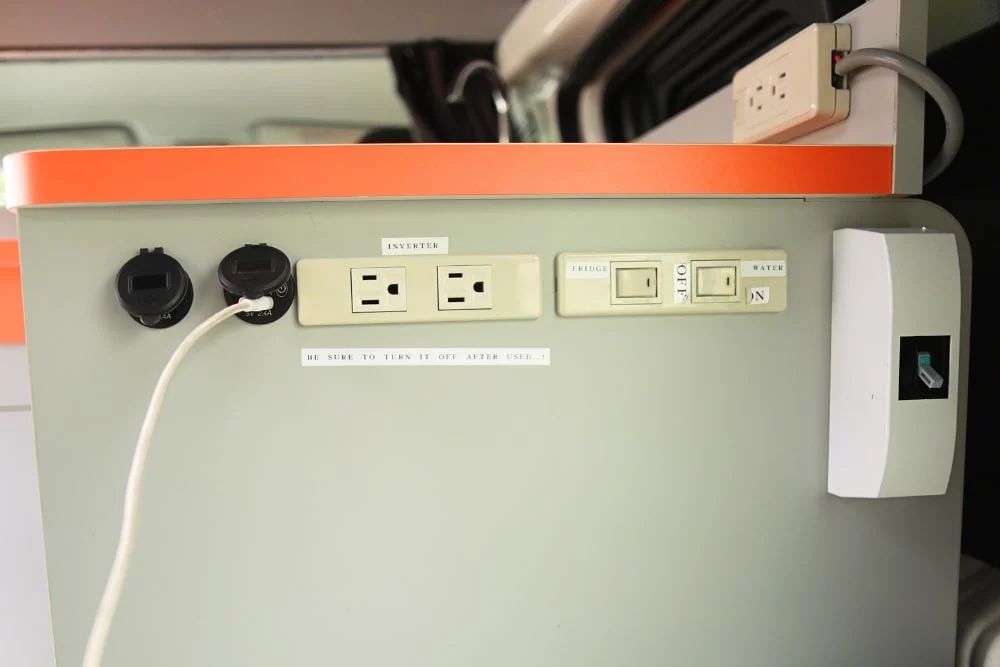
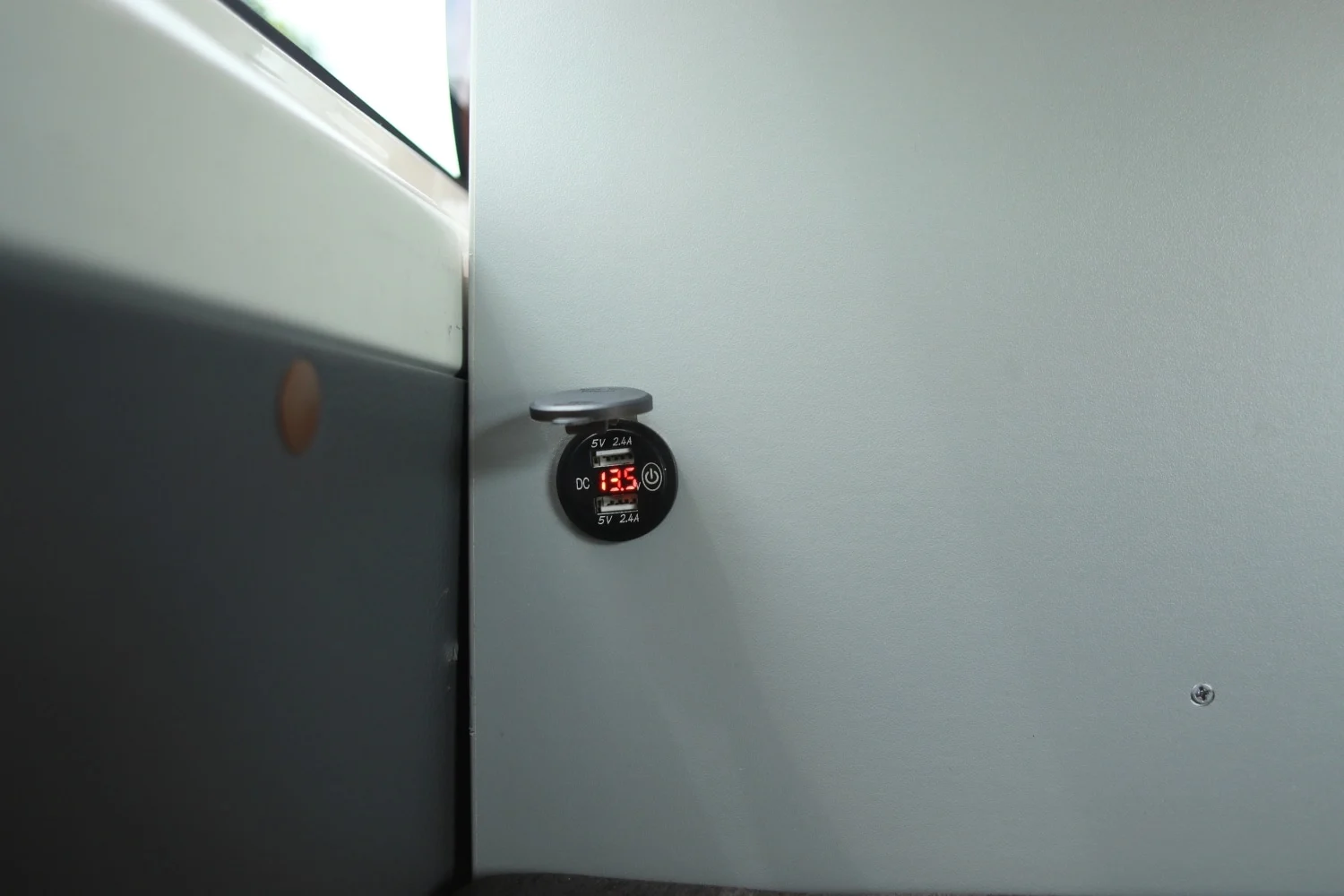
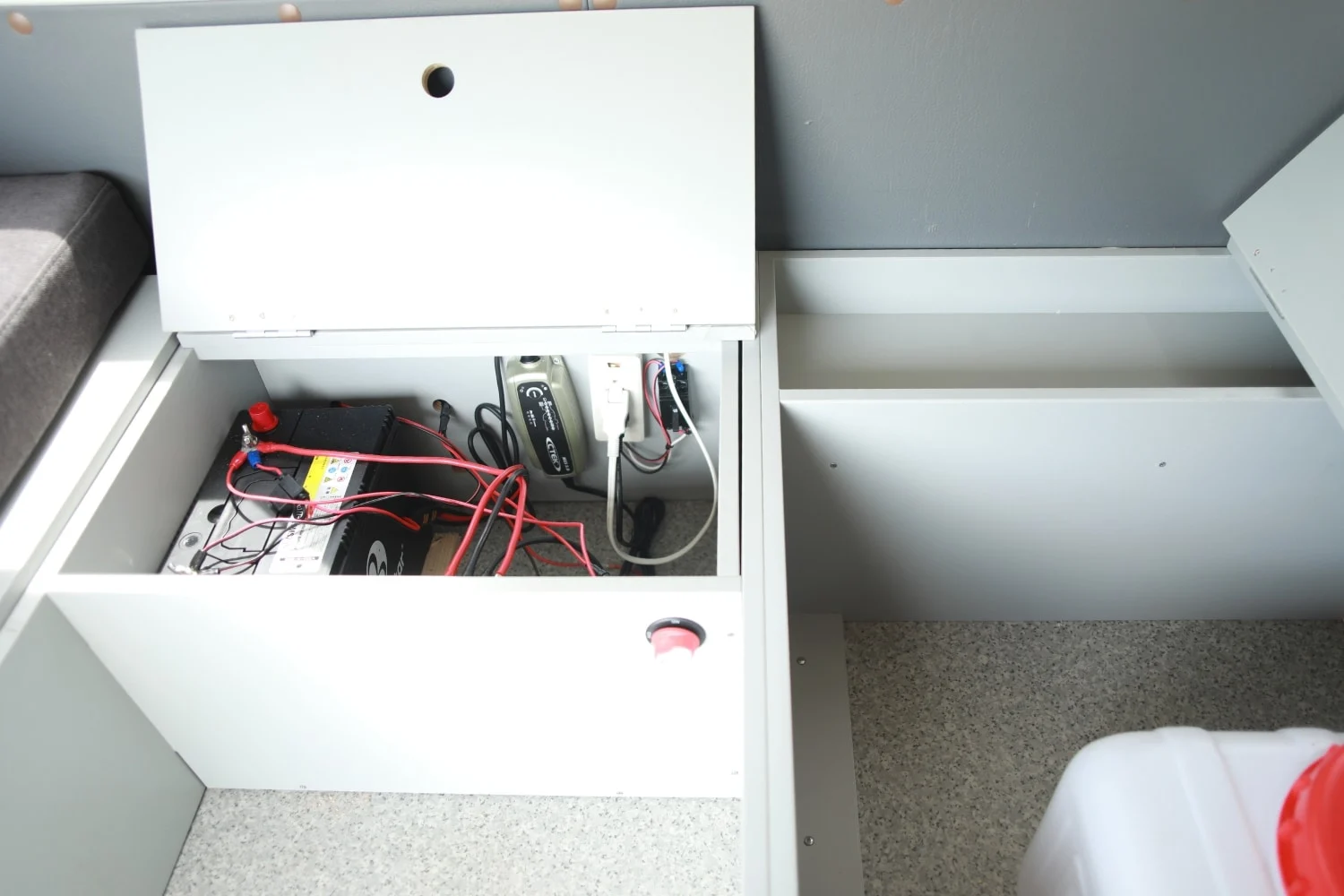
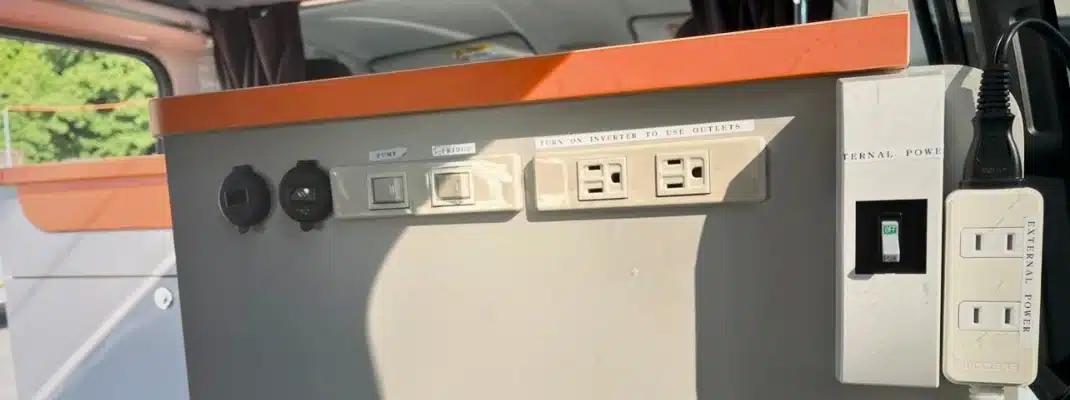
Most campervans use a leisure battery to power essentials such as the lights, fridge, water pump and charging points. This is usually separate from the battery used to start the vehicle.
Depending on the campervan, the leisure battery may recharge while you drive. Some vehicles may also include solar panels or the option to connect to an external power supply at a campsite. Before setting off, make sure you know how your particular system works and how to check the remaining battery level.
To make your power last longer:
- Charge phones, navigation devices and portable Wi-Fi units while driving.
- Prioritise essential devices rather than charging everything at once.
- Switch off lights and equipment when they are not in use.
- Avoid high-powered appliances unless the rental company confirms they are suitable.
Hairdryers, kettles and electric heaters can drain the battery quickly or overload the system. Japan also uses 100-volt electricity, so check that any appliances and adapters brought from home are compatible.
An occasional stay at a powered campsite can be useful for recharging devices, topping up water and using shared facilities. Check what is available before arriving, as not every campsite provides an electrical hookup.
Enjoy More Freedom on the Road
Managing gas, water and power is mostly about getting into a simple routine. A quick check each morning can help you see what needs topping up before you start driving.
You should also dispose of wastewater and rubbish responsibly. Never empty dirty water in car parks, on roads or on public land. Use approved campsite facilities and follow the guidance provided by your rental company.
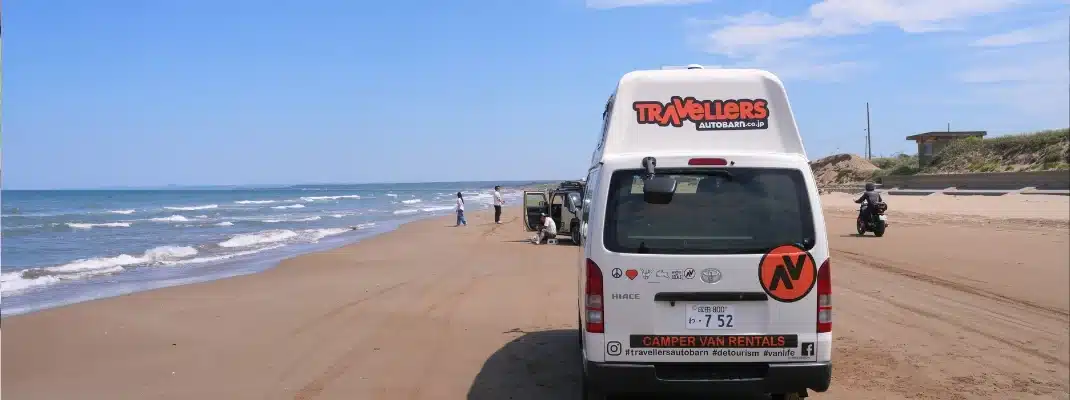
Once the practical side becomes familiar, it fades into the background. You can then focus on the best part of the journey: exploring Japan, discovering new places and enjoying the flexibility of campervan travel.
Find Your Itinerary:
Japan’s Early Winter Foliage: A 14-Day December Campervan Tour
About the Author

Mayumi
I love nature and travel. I have lived and traveled in some countries and seen many cultures. I would love to share stories of Japan so that visitors can learn more about this wonderful and unique culture and have an unforgettable and enjoyable trip.

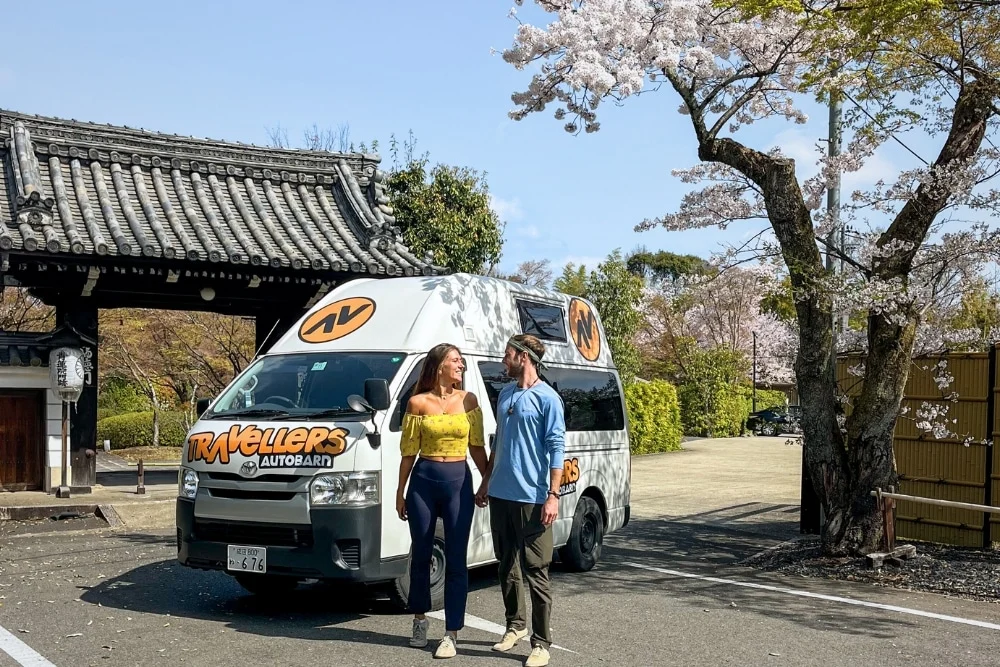
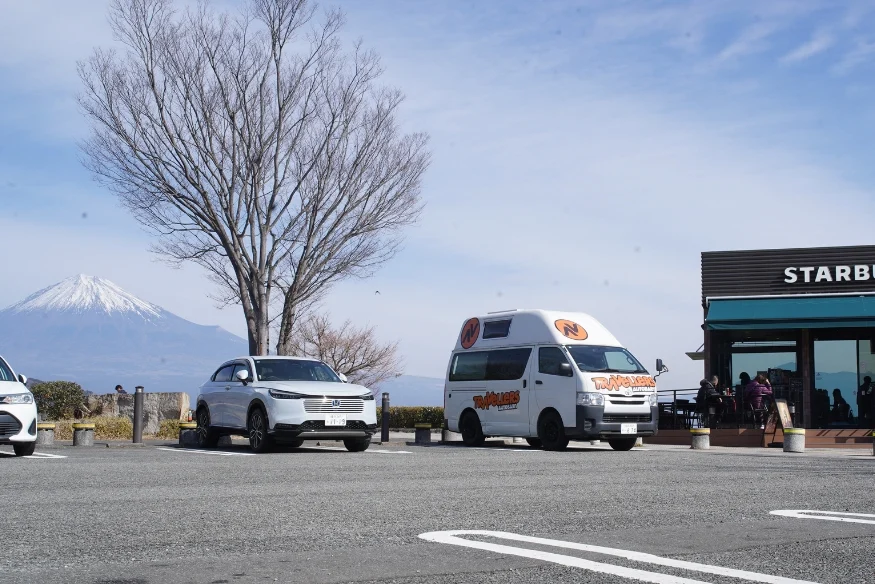
Our Campervans